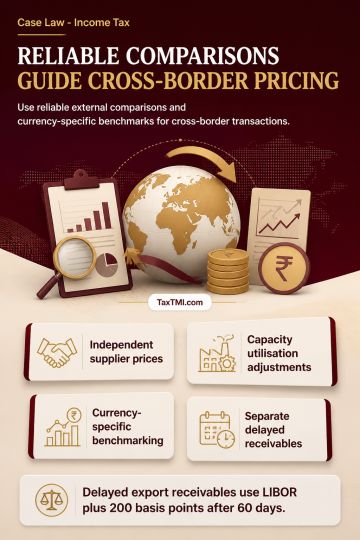
Transfer pricing comparability prioritises reliable external CUPs and foreign-currency LIBOR benchmarks for exports, borrowings and delayed receivable...
Section 153C satisfaction and seized electronic records sustained unexplained-investment addition, subject to proportionate ownership-share verificati...
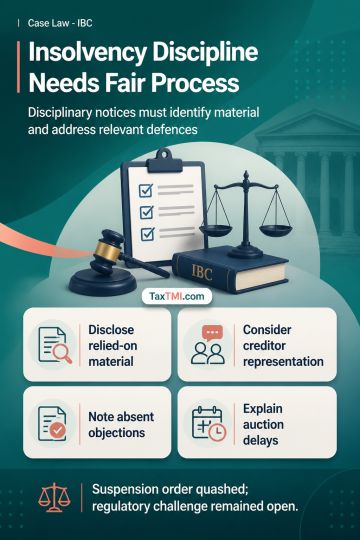
Natural justice in insolvency-professional discipline requires disclosed material; notices based on extraneous material and ignored defences are vitia...
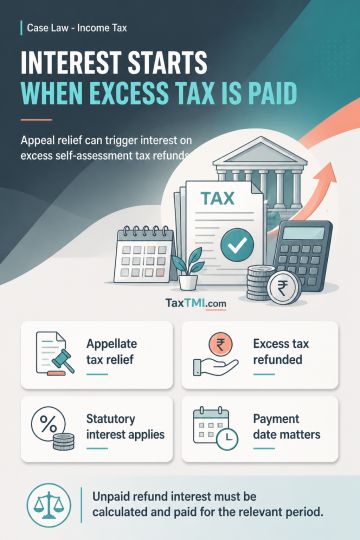
Excess self-assessment tax refunded after appellate relief attracts interest as a statutory, non-discretionary consequence where tax ultimately chargeable is lower than tax paid. Refund entitlement arises when tax deducted at source, advance tax, self-assessment tax, or regular-assessment tax exceeds the final annual tax liability following appeal or other proceedings. Where prescribed computation categories do not govern, interest on excess tax runs from the payment date. Unpaid interest on the resulting refund must be determined and paid for the relevant period, including up to the point at which interest had already been granted.
Excess self-assessment tax refunded after appellate relief attracts interest as a statutory, non-discretionary consequence where tax ultimately chargeable is lower than tax paid. Refund entitlement arises when tax deducted at source, advance tax, self-assessment tax, or regular-assessment tax exceeds the final annual tax liability following appeal or other proceedings. Where prescribed computation categories do not govern, interest on excess tax runs from the payment date. Unpaid interest on the resulting refund must be determined and paid for the relevant period, including up to the point at which interest had already been granted.
Note: It is a system-generated summary and is for quick reference only.
 TaxTMI
  TaxTMI
 of 4817











 Join Channel