Transaction value rejection requires reliable corroboration; refundable VAT is excluded and temporary registration does not defeat new-vehicle exempti...
Appellate jurisdiction remains available where a wrist-worn gold ornament cannot conclusively be characterised as imported baggage at the preliminary ...
Written complaint requirement bars cognizance on police reports for securities offences, while unsupported breach of trust and cheating allegations fa...
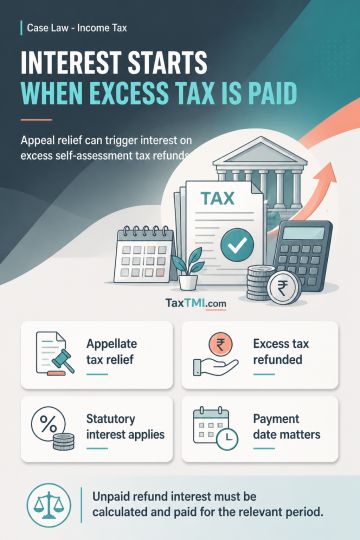
Excess self-assessment tax refunded after appellate relief attracts interest as a statutory, non-discretionary consequence where tax ultimately chargeable is lower than tax paid. Refund entitlement arises when tax deducted at source, advance tax, self-assessment tax, or regular-assessment tax exceeds the final annual tax liability following appeal or other proceedings. Where prescribed computation categories do not govern, interest on excess tax runs from the payment date. Unpaid interest on the resulting refund must be determined and paid for the relevant period, including up to the point at which interest had already been granted.
Excess self-assessment tax refunded after appellate relief attracts interest as a statutory, non-discretionary consequence where tax ultimately chargeable is lower than tax paid. Refund entitlement arises when tax deducted at source, advance tax, self-assessment tax, or regular-assessment tax exceeds the final annual tax liability following appeal or other proceedings. Where prescribed computation categories do not govern, interest on excess tax runs from the payment date. Unpaid interest on the resulting refund must be determined and paid for the relevant period, including up to the point at which interest had already been granted.
Note: It is a system-generated summary and is for quick reference only.
 TaxTMI
  TaxTMI
 of 4827








 Join Channel