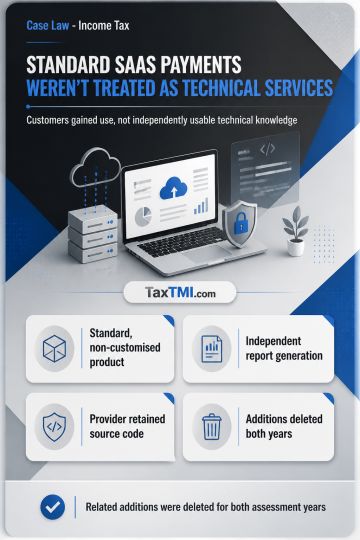
Make-available condition excludes standard SaaS subscription receipts where customers receive no independently usable technical knowledge after subscr...
Anonymous donation classification fails where charitable trusts maintain undisputed donor identity records and evidence corpus contributions' intended...
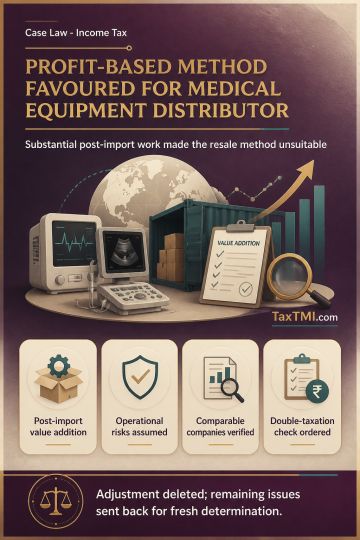
Transfer pricing method selection favours TNMM where medical-equipment distribution involves substantial post-import value addition and operational ri...
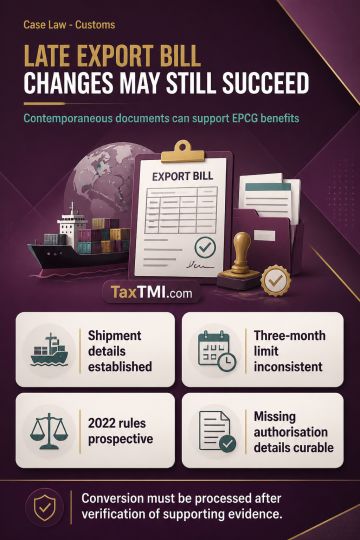
Post-export shipping bill conversion remains available where contemporaneous evidence supports EPCG benefits despite curable procedural omissions and ...
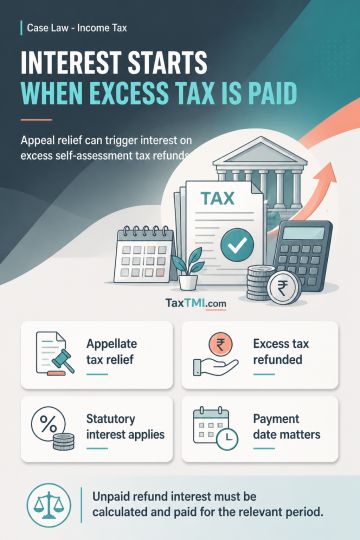
Excess self-assessment tax refunded after appellate relief attracts interest as a statutory, non-discretionary consequence where tax ultimately chargeable is lower than tax paid. Refund entitlement arises when tax deducted at source, advance tax, self-assessment tax, or regular-assessment tax exceeds the final annual tax liability following appeal or other proceedings. Where prescribed computation categories do not govern, interest on excess tax runs from the payment date. Unpaid interest on the resulting refund must be determined and paid for the relevant period, including up to the point at which interest had already been granted.
Excess self-assessment tax refunded after appellate relief attracts interest as a statutory, non-discretionary consequence where tax ultimately chargeable is lower than tax paid. Refund entitlement arises when tax deducted at source, advance tax, self-assessment tax, or regular-assessment tax exceeds the final annual tax liability following appeal or other proceedings. Where prescribed computation categories do not govern, interest on excess tax runs from the payment date. Unpaid interest on the resulting refund must be determined and paid for the relevant period, including up to the point at which interest had already been granted.
Note: It is a system-generated summary and is for quick reference only.
 TaxTMI
  TaxTMI
 of 4819













 Join Channel