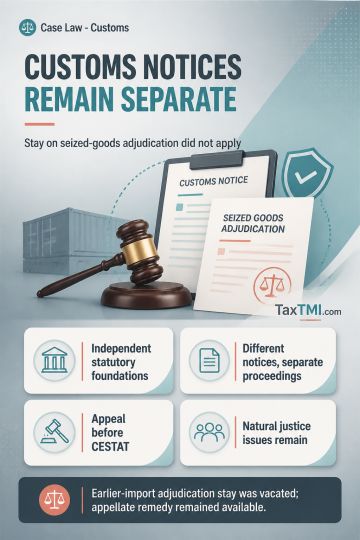
Independent show-cause notices remain separate proceedings, while customs adjudication challenges should ordinarily follow the statutory appellate rem...
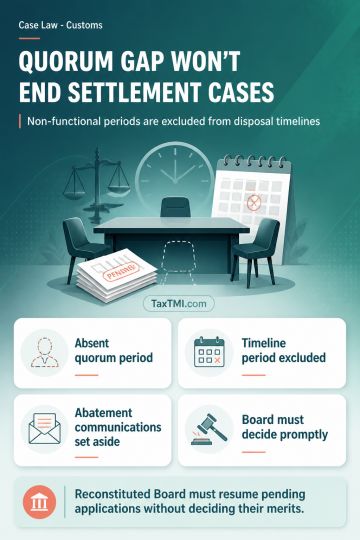
Institutional incapacity in customs settlement proceedings excludes non-functional quorum periods from statutory disposal timelines, preventing automa...
Interactive touchscreen panels with integrated computing functions fall under automatic data-processing machines rather than display monitors for cust...
Ex parte injunction service requirements were substantially met, while civil recovery and SFIO investigation into provident fund defalcation continued...
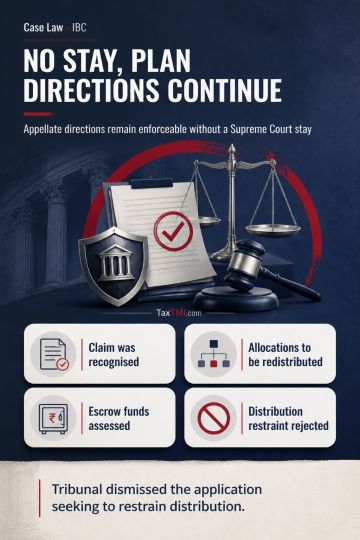
Enforcement of resolution-plan directions continues without a Supreme Court stay, preventing suspension of redistribution and escrowed-fund distributi...
Third-party ownership claims over attached property require Special Court adjudication where purchasers lack registered sale deeds and bona fides rema...
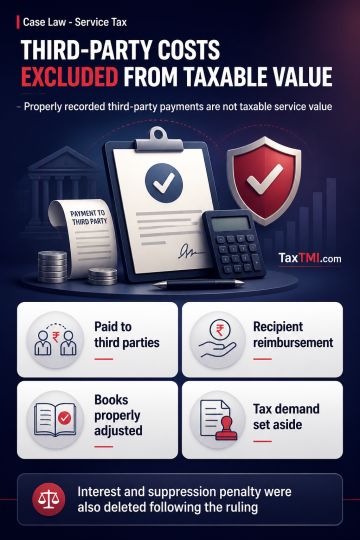
Pure-agent reimbursements in clearing and forwarding services are excluded from taxable value when qualifying third-party payments are properly record...
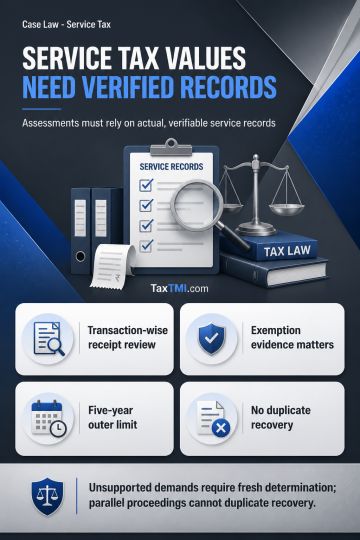
Best-judgment assessment of security agency service value must rest on actual, verifiable records and a rational nexus to services and consideration, rather than assumed growth or earlier peak turnover; unsupported demands require fresh determination. Receipts must be examined transaction-wise to exclude legally exempt, non-taxable and genuine reimbursable amounts, subject after amendment to pure-agent conditions. Export and SEZ exemptions require examination of transactional evidence, not rejection solely for missing documents. CENVAT credit cannot be denied merely because salary expenditure predominates; admissibility requires record-based verification. Extended limitation requires deliberate evasion and is unavailable for disclosed audited records, subject in any event to the five-year outer limit. Parallel proceedings must not produce duplicate demand or recovery; remand must exclude transactions already determined.
Best-judgment assessment of security agency service value must rest on actual, verifiable records and a rational nexus to services and consideration, rather than assumed growth or earlier peak turnover; unsupported demands require fresh determination. Receipts must be examined transaction-wise to exclude legally exempt, non-taxable and genuine reimbursable amounts, subject after amendment to pure-agent conditions. Export and SEZ exemptions require examination of transactional evidence, not rejection solely for missing documents. CENVAT credit cannot be denied merely because salary expenditure predominates; admissibility requires record-based verification. Extended limitation requires deliberate evasion and is unavailable for disclosed audited records, subject in any event to the five-year outer limit. Parallel proceedings must not produce duplicate demand or recovery; remand must exclude transactions already determined.
Note: It is a system-generated summary and is for quick reference only.
 TaxTMI
  TaxTMI
 of 4823














 Join Channel