Charitable registration renewal cannot become an assessment of receipts, profitability or annual exemption compliance, requiring renewal and donation ...
AMP expenditure for own business is not an international transaction without an associated-enterprise arrangement, eliminating transfer pricing adjust...
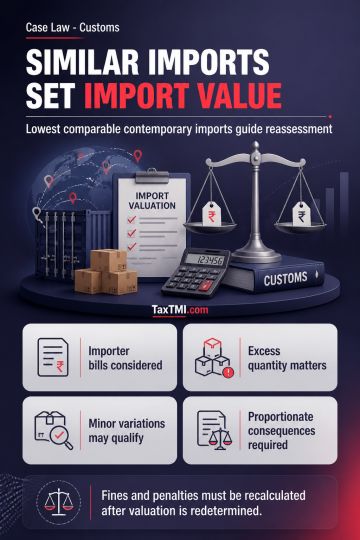
Customs valuation must use comparable contemporary imports, while confiscation fines and penalties require proportionate recalculation on reassessed v...
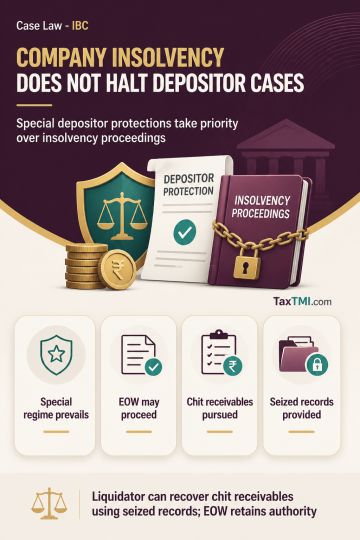
Depositor-protection proceedings prevail over corporate insolvency, while liquidators may recover chit receivables using copies of seized company reco...
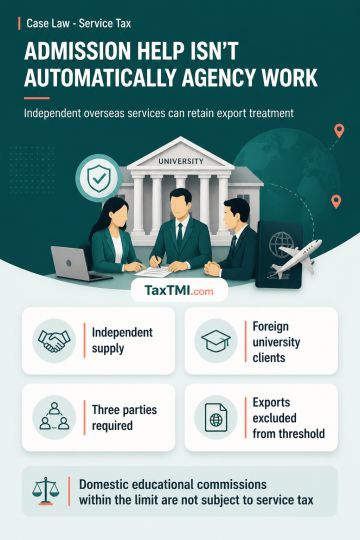
Intermediary service classification fails where overseas admission facilitation is supplied independently, preserving export treatment and small-provi...
Satellite transponder bandwidth is telecommunication, not Business Support Service; foreign non-telegraph providers triggered no service tax liability...
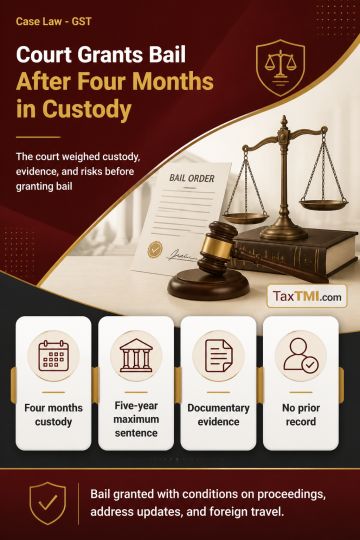
Regular bail in alleged fraudulent input tax credit availment through fake invoices depends on more than the seriousness of an economic offence. Relevant considerations include custody period, maximum punishment, the nature of evidence, risk of evidence tampering or witness influence, cooperation with trial, prior antecedents, and the likelihood of early trial completion. The High Court found that the accused had spent about four months in custody, faced a maximum five-year sentence, had no antecedents, and confronted documentary evidence, with no material showing interference risk. Bail was granted on bonds, subject to conditions against interfering with proceedings, requiring address updates, and restricting foreign travel without permission.
Regular bail in alleged fraudulent input tax credit availment through fake invoices depends on more than the seriousness of an economic offence. Relevant considerations include custody period, maximum punishment, the nature of evidence, risk of evidence tampering or witness influence, cooperation with trial, prior antecedents, and the likelihood of early trial completion. The High Court found that the accused had spent about four months in custody, faced a maximum five-year sentence, had no antecedents, and confronted documentary evidence, with no material showing interference risk. Bail was granted on bonds, subject to conditions against interfering with proceedings, requiring address updates, and restricting foreign travel without permission.
Note: It is a system-generated summary and is for quick reference only.
 TaxTMI
  TaxTMI
 of 4816













 Join Channel