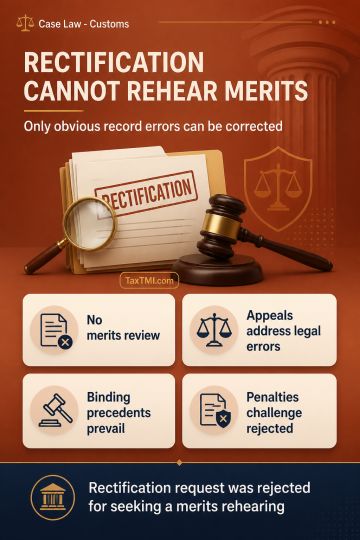
Rectification of mistake remains limited to self-evident record errors, preventing merits review through miscellaneous applications and preserving fin...
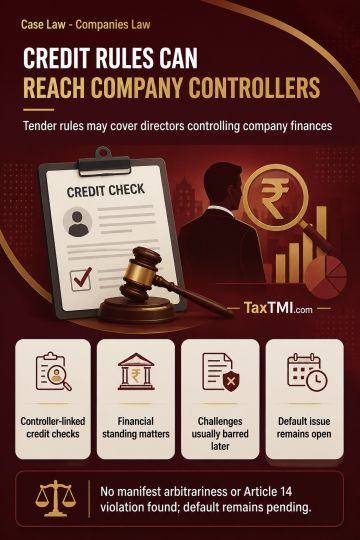
Tender creditworthiness conditions may extend to de facto Promoter Directors, with post-participation challenges generally barred absent arbitrariness...
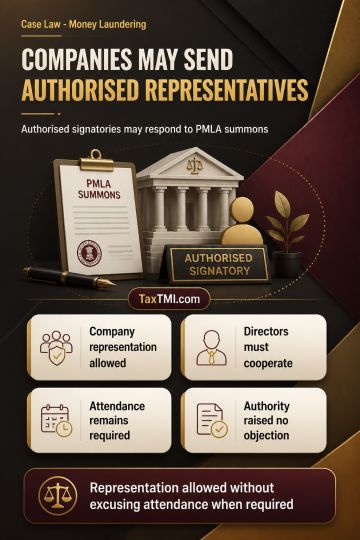
Corporate representation in PMLA summons proceedings permitted through an authorised signatory, subject to directors' continuing cooperation and atten...
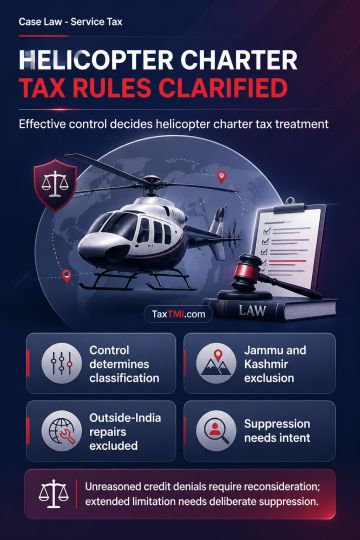
Helicopter charter classification requires effective control analysis, while territorial performance, reasoned credit orders and wilful suppression de...
Specified fund definition expands PAN exemption eligibility for registered alternative investment funds and qualifying International Financial Service...
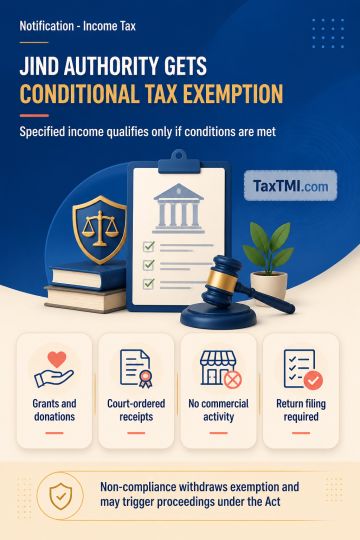
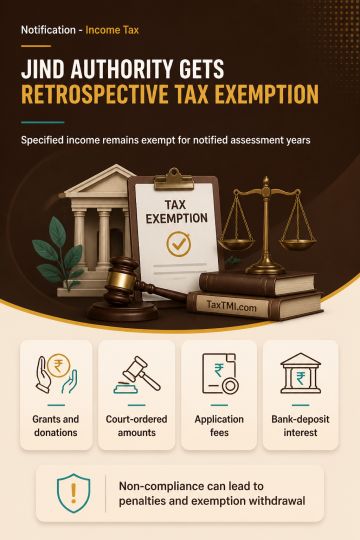
Tax exemption for specified legal-services authority income applies retrospectively, subject to non-commercial activity, unchanged income sources, and...
Vicarious liability of a company director for cheque dishonour...
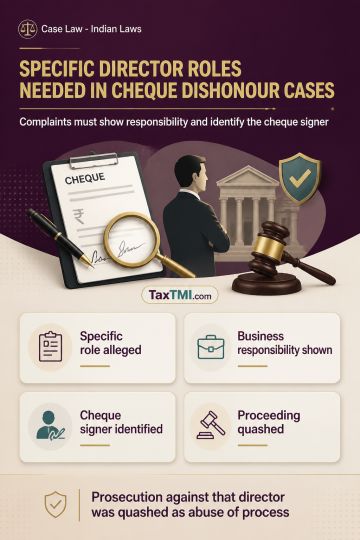
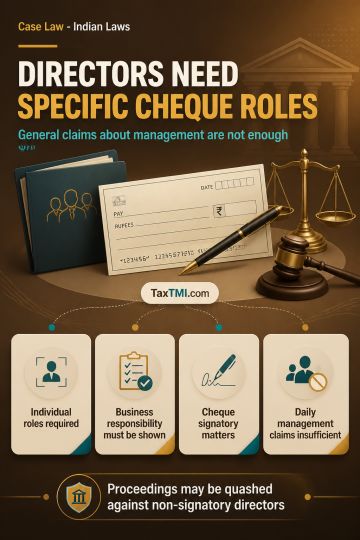
Vicarious liability for cheque dishonour requires specific allegations of responsibility and cheque signatory; generic director allegations cannot sustain prosecution.
Contents
Summary
Note
Bookmark
Share
✓ Copied successfully !
Print
Print Options
For full text, please login
Login to TaxTMI
Verification Pending
The Email Id has not been verified. Click on the link we have sent on
Vicarious liability of a company director for cheque dishonour requires a complaint to specifically aver that the director was both in charge of, and responsible to, the company for conducting its business when the offence occurred. Mere directorship or a general allegation that all directors managed day-to-day affairs is insufficient. The complaint must also disclose the identity of the person who drew or signed the cheque. As no individual role was attributed to the director and no cheque signatory was identified, continuation of the prosecution was treated as an abuse of process and the cheque-dishonour proceeding was quashed against that director.
Vicarious liability of a company director for cheque dishonour requires a complaint to specifically aver that the director was both in charge of, and responsible to, the company for conducting its business when the offence occurred. Mere directorship or a general allegation that all directors managed day-to-day affairs is insufficient. The complaint must also disclose the identity of the person who drew or signed the cheque. As no individual role was attributed to the director and no cheque signatory was identified, continuation of the prosecution was treated as an abuse of process and the cheque-dishonour proceeding was quashed against that director.
Note: It is a system-generated summary and is for quick reference only.
 TaxTMI
  TaxTMI
 of 4830






 Join Channel