Specialized Investment Fund distribution now requires dedicated certification, while transitional recognition preserves existing qualified distributor...
Overlapping GST proceedings require Central and State authorities to designate one competent authority for coordinated adjudication of the same matter...
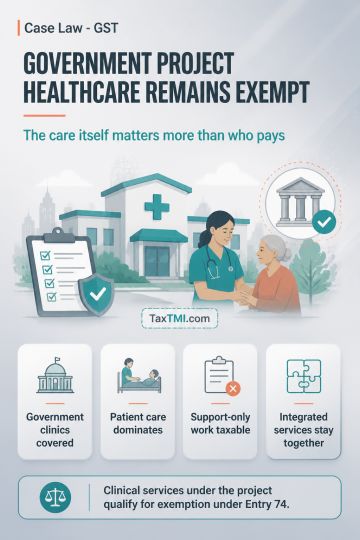
Composite healthcare supplies retain exemption when patient care is the contract's essential character, despite payment through an implementing agency...
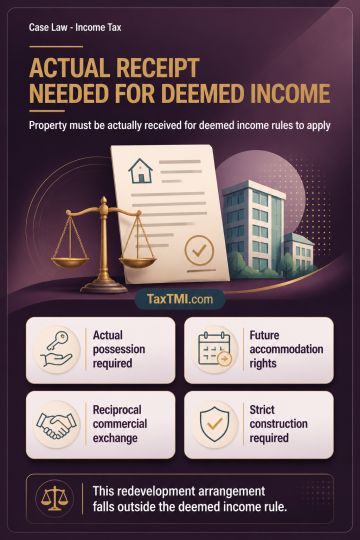
Receipt of immovable property requires actual possession or enjoyment; redevelopment allotments exchanged for tenancy rights fall outside deemed incom...
Page of 4828
Press 'Enter' after typing page number.
1481 to 1500 of 96556 Results
❮
❯
❯❯
0 / 200
Expand Note
Add to Folder
No Folders have been created
+
Are you sure you want to delete "My most important" ?
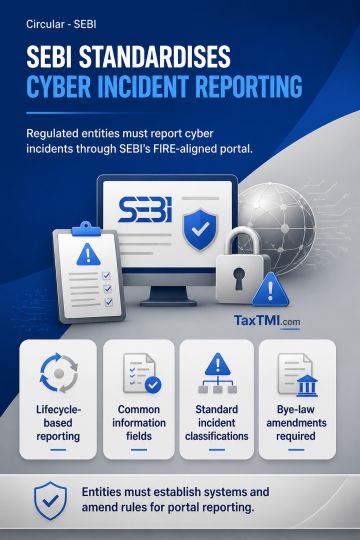
Cyber incident reporting by regulated entities must be made through SEBI's Cyber Incident Reporting Portal, aligned with the Financial Stability Board's Format for Incident Reporting Exchange (FIRE). The aligned portal requires structured reporting using common information fields, standard definitions and consistent incident classifications, supporting harmonised reporting. It permits reporting across the incident lifecycle, including initial notification, intermediate updates and final closure, recognising that complete information may not be available initially. Regulated entities must establish systems to implement the portal-based reporting requirement and make any necessary amendments to their bye-laws, rules or regulations. The requirement operates alongside applicable cybersecurity and cyber-resilience reporting obligations.
Cyber incident reporting by regulated entities must be made through SEBI's Cyber Incident Reporting Portal, aligned with the Financial Stability Board's Format for Incident Reporting Exchange (FIRE). The aligned portal requires structured reporting using common information fields, standard definitions and consistent incident classifications, supporting harmonised reporting. It permits reporting across the incident lifecycle, including initial notification, intermediate updates and final closure, recognising that complete information may not be available initially. Regulated entities must establish systems to implement the portal-based reporting requirement and make any necessary amendments to their bye-laws, rules or regulations. The requirement operates alongside applicable cybersecurity and cyber-resilience reporting obligations.
Note: It is a system-generated summary and is for quick reference only.
 TaxTMI
  TaxTMI
 of 4828















 Join Channel