Unified Brand India framework introduces voluntary Trust Mark certification and funding support for export branding, packaging and global promotional ...
Origin Declaration authentication governs preferential tariff claims under India-UK CETA, requiring a validated reference number before import clearan...
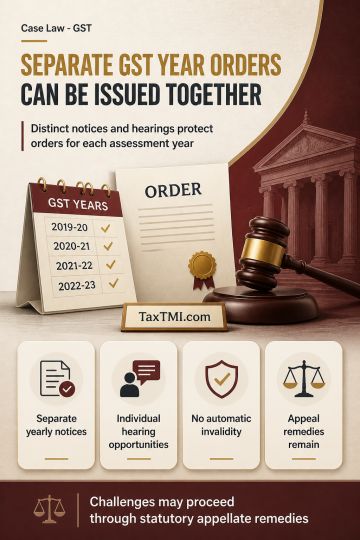
Separate assessment orders for different years remain valid when distinct notices and hearing opportunities prevent prejudice from combined proceeding...
Defined public benefit can retain charitable character; registration renewal requires examining genuine activities and legal compliance, not surplus a...
Capital reduction is distinct from share buy-back, preventing buy-back tax; restructuring interest and related business deductions also survive scruti...
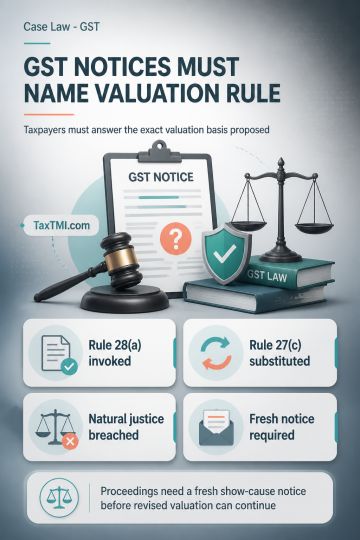
GST valuation proceedings require the show-cause notice to identify the valuation rule on which the proposed demand rests. Where a notice invokes Rule 28(a), but the adjudicating authority finds that rule inapplicable and instead confirms the demand under Rule 27(c), the taxpayer must receive notice and an opportunity to respond to that distinct basis. Substituting the valuation rule at adjudication causes prejudice and breaches natural justice. A fresh show-cause notice is required before proceedings may be pursued on the revised valuation basis.
GST valuation proceedings require the show-cause notice to identify the valuation rule on which the proposed demand rests. Where a notice invokes Rule 28(a), but the adjudicating authority finds that rule inapplicable and instead confirms the demand under Rule 27(c), the taxpayer must receive notice and an opportunity to respond to that distinct basis. Substituting the valuation rule at adjudication causes prejudice and breaches natural justice. A fresh show-cause notice is required before proceedings may be pursued on the revised valuation basis.
Note: It is a system-generated summary and is for quick reference only.
 TaxTMI
  TaxTMI
 of 4826















 Join Channel