Transaction value rejection requires reliable corroboration; refundable VAT is excluded and temporary registration does not defeat new-vehicle exempti...
Appellate jurisdiction remains available where a wrist-worn gold ornament cannot conclusively be characterised as imported baggage at the preliminary ...
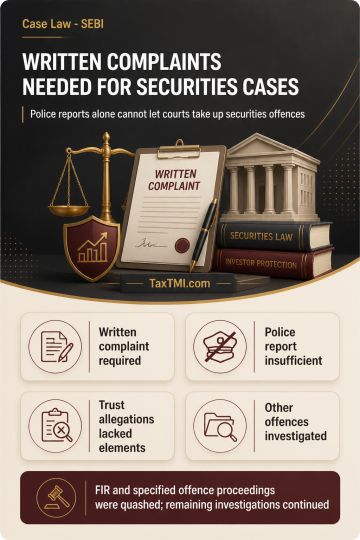
Written complaint requirement bars cognizance on police reports for securities offences, while unsupported breach of trust and cheating allegations fa...
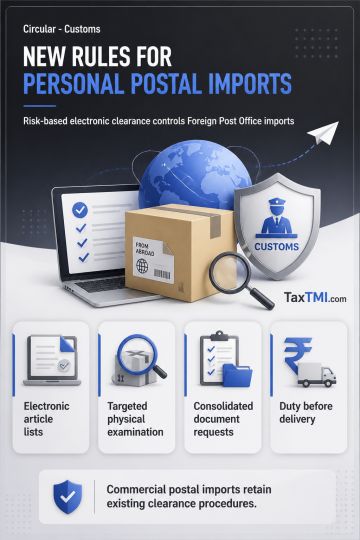
Risk-based postal import clearance standardises electronic assessment, document requests, duty realisation and delivery controls at Foreign Post Offic...
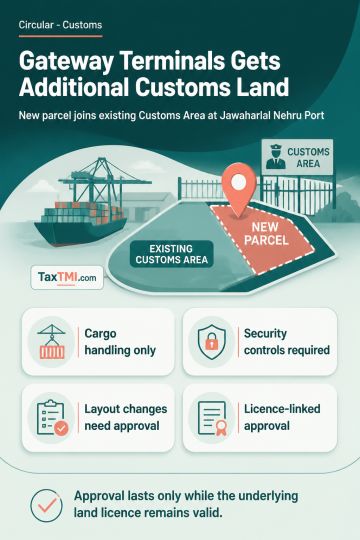
Customs Cargo Service Provider appointment extends custodianship to additional terminal land, subject to cargo-control, security and licence condition...
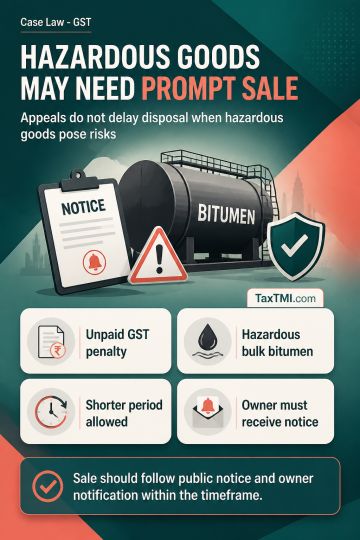
Section 129(6) of the GST Acts requires detained goods to be sold or otherwise disposed of to recover an unpaid penalty after the prescribed period. Its proviso permits a shorter period where goods are perishable, hazardous or likely to depreciate. Inflammable bulk bitumen qualifies as hazardous goods, so the continuing availability of an appeal does not displace the obligation to initiate disposal where risk to the goods and conveyance warrants prompt action. Sale should proceed through public notice, with notice to the owner, within the stipulated timeframe.
Section 129(6) of the GST Acts requires detained goods to be sold or otherwise disposed of to recover an unpaid penalty after the prescribed period. Its proviso permits a shorter period where goods are perishable, hazardous or likely to depreciate. Inflammable bulk bitumen qualifies as hazardous goods, so the continuing availability of an appeal does not displace the obligation to initiate disposal where risk to the goods and conveyance warrants prompt action. Sale should proceed through public notice, with notice to the owner, within the stipulated timeframe.
Note: It is a system-generated summary and is for quick reference only.
 TaxTMI
  TaxTMI
 of 4817








 Join Channel