Commercial vehicle depreciation, scientifically determined warranty provisions and exempt-income disallowances were resolved in favour of the taxpayer...
Inherited property sale proceeds require capital-gains treatment where ownership is supported by evidence, not suspicion or unverified signature doubt...
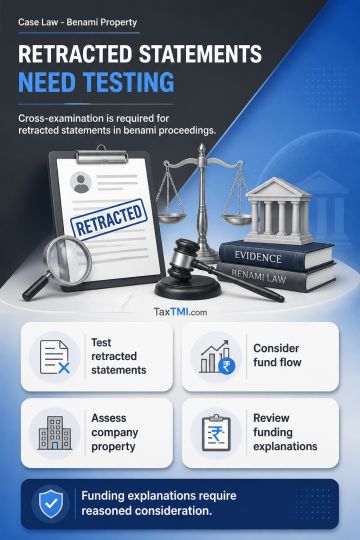
Cross-examination of retracted statements is essential where foundational evidence supports a benami allegation and documented funding explanations re...
Capital-goods exemption covers plant-modernisation accessories, while the import restriction applies only to earlier capital-goods components and spar...
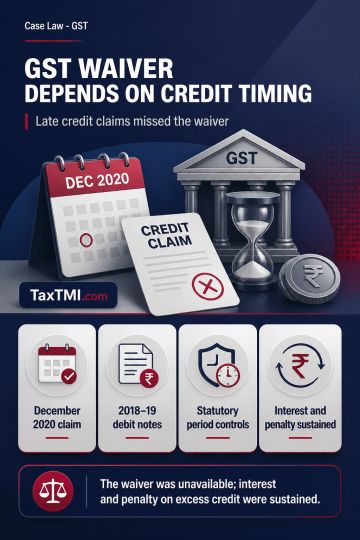
GST amnesty waiver eligibility for interest and penalty depends on the disputed input tax credit being availed within the prescribed statutory period, rather than on the financial year in which the underlying debit notes were issued. Excess credit first claimed in the December 2020 return fell outside the scheme's temporal scope despite its connection with debit notes from 2018-19. Guidance or decisions concerning input tax credit mismatch reconciliation cannot extend an expressly limited statutory period. The waiver was unavailable, and the interest and penalty on the excess credit claim were sustained.
GST amnesty waiver eligibility for interest and penalty depends on the disputed input tax credit being availed within the prescribed statutory period, rather than on the financial year in which the underlying debit notes were issued. Excess credit first claimed in the December 2020 return fell outside the scheme's temporal scope despite its connection with debit notes from 2018-19. Guidance or decisions concerning input tax credit mismatch reconciliation cannot extend an expressly limited statutory period. The waiver was unavailable, and the interest and penalty on the excess credit claim were sustained.
Note: It is a system-generated summary and is for quick reference only.
 TaxTMI
  TaxTMI
 of 4819

















 Join Channel