Vicarious liability for dishonoured company cheques may extend to non-signatory directors where complaints contain foundational responsibility avermen...
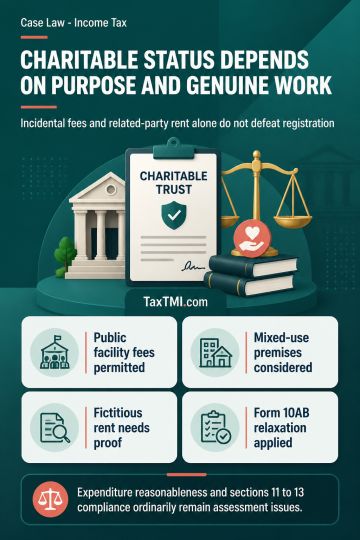
Charitable registration turns on predominant purpose and genuine activities, while incidental fees and related-party rent require supporting adverse m...
MAT book-profit adjustments exclude disallowances for exempt-income expenditure and demerger expenditure unless expressly listed under the statutory c...
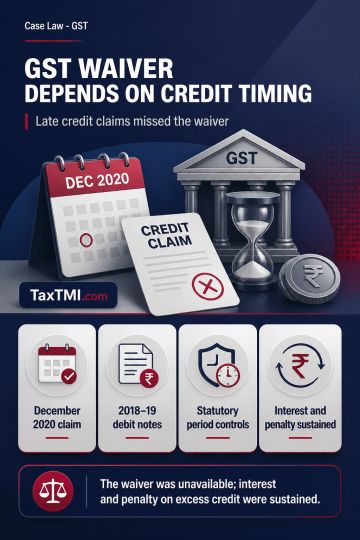
GST amnesty waiver eligibility for interest and penalty depends on the disputed input tax credit being availed within the prescribed statutory period, rather than on the financial year in which the underlying debit notes were issued. Excess credit first claimed in the December 2020 return fell outside the scheme's temporal scope despite its connection with debit notes from 2018-19. Guidance or decisions concerning input tax credit mismatch reconciliation cannot extend an expressly limited statutory period. The waiver was unavailable, and the interest and penalty on the excess credit claim were sustained.
GST amnesty waiver eligibility for interest and penalty depends on the disputed input tax credit being availed within the prescribed statutory period, rather than on the financial year in which the underlying debit notes were issued. Excess credit first claimed in the December 2020 return fell outside the scheme's temporal scope despite its connection with debit notes from 2018-19. Guidance or decisions concerning input tax credit mismatch reconciliation cannot extend an expressly limited statutory period. The waiver was unavailable, and the interest and penalty on the excess credit claim were sustained.
Note: It is a system-generated summary and is for quick reference only.
 TaxTMI
  TaxTMI
 of 4817






 Join Channel