Food supplement classification requires common parlance and authoritative tests, preventing treatment as proprietary Ayurvedic medicines without suppo...
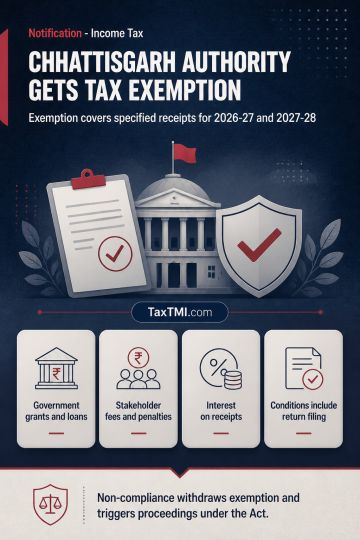
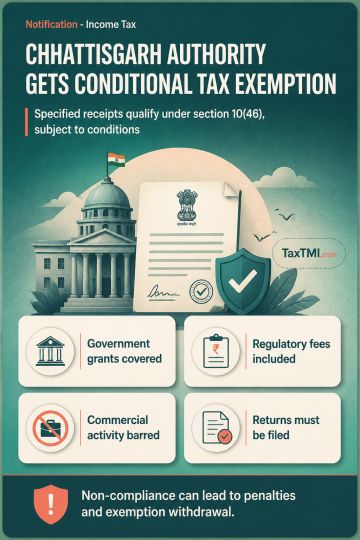
Specified regulatory authority income receives conditional tax exemption, subject to non-commercial activity, unchanged income character, and return f...
Tax exemption for regulatory authority income applies retrospectively, subject to non-commercial activity, unchanged income sources, and return-filing...
Input tax credit conditions remain constitutionally valid, with eligible recipient claims considered under GST circulars and retrospective filing dead...
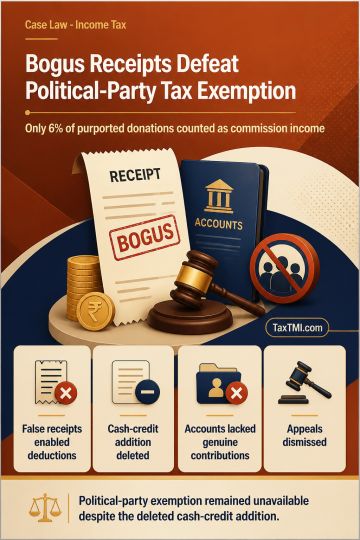
Bogus donation receipts justified commission income assessment and defeated political-party tax exemption for inaccurate accounts and reporting failur...
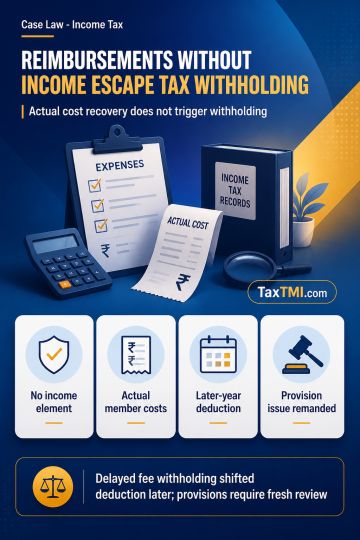
Pure reimbursement without income element escapes tax withholding, while delayed withholding and unsupported provisions face deferred or renewed scrut...
Page of 4819
Press 'Enter' after typing page number.
1061 to 1080 of 96365 Results
❮
❯
❯❯
0 / 200
Expand Note
Add to Folder
No Folders have been created
+
Are you sure you want to delete "My most important" ?
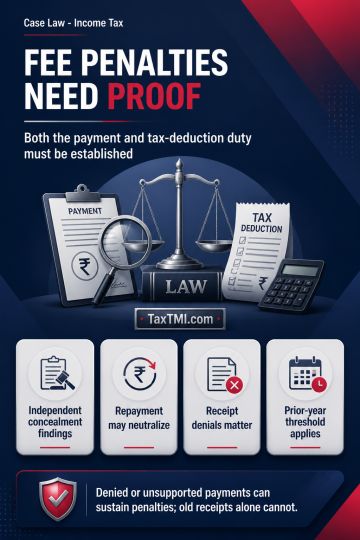
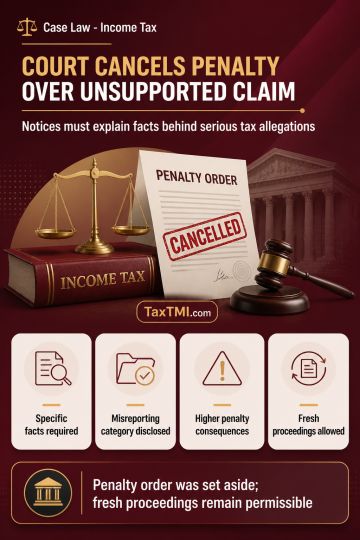
Penalty for inaccurate particulars in professional-fee claims requires substantiated expenditure and independent findings supporting concealment or inaccurate particulars. A payment characterised as professional fees but shown to be a loan advanced and repaid, with a corresponding receipt credited to profit and loss, is revenue neutral and does not support disallowance or penalty. Conversely, penalty remains justified where claimed payees deny receipt or payments remain unsubstantiated. Liability to deduct tax on professional fees depends on satisfying the statutory threshold based on gross receipts in the immediately preceding financial year; older receipt data alone is insufficient. Disallowance for non-deduction of tax does not, by itself, justify penalty.
Penalty for inaccurate particulars in professional-fee claims requires substantiated expenditure and independent findings supporting concealment or inaccurate particulars. A payment characterised as professional fees but shown to be a loan advanced and repaid, with a corresponding receipt credited to profit and loss, is revenue neutral and does not support disallowance or penalty. Conversely, penalty remains justified where claimed payees deny receipt or payments remain unsubstantiated. Liability to deduct tax on professional fees depends on satisfying the statutory threshold based on gross receipts in the immediately preceding financial year; older receipt data alone is insufficient. Disallowance for non-deduction of tax does not, by itself, justify penalty.
Note: It is a system-generated summary and is for quick reference only.
 TaxTMI
  TaxTMI
 of 4819












 Join Channel