Necessary-party requirements limit impleadment of independent entities, while deferred consideration does not create an appealable adverse determinati...
Food supplement classification requires common parlance and authoritative tests, preventing treatment as proprietary Ayurvedic medicines without suppo...
Specified regulatory authority income receives conditional tax exemption, subject to non-commercial activity, unchanged income character, and return f...
Tax exemption for regulatory authority income applies retrospectively, subject to non-commercial activity, unchanged income sources, and return-filing...
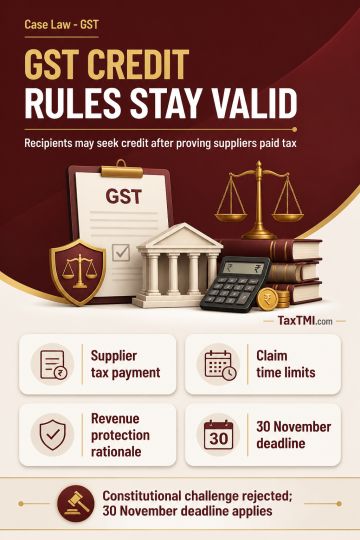
Input tax credit conditions remain constitutionally valid, with eligible recipient claims considered under GST circulars and retrospective filing dead...
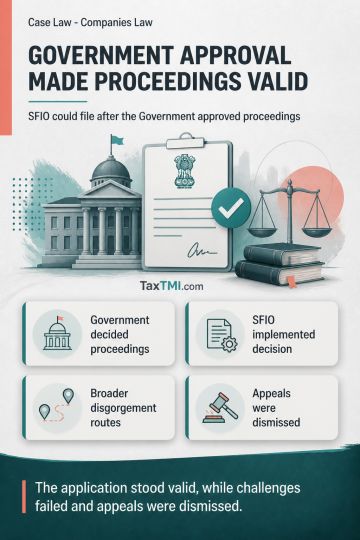
Authorization to the SFIO Director to present attachment and disgorgement proceedings in the Union of India's name does not constitute delegation of statutory power where the Central Government has already considered the investigation report, decided to institute proceedings, and retains essential decision-making discretion. The application was therefore validly instituted through an authorised officer. Disgorgement and asset-freezing relief for oppression, mismanagement and fraudulent conduct are not confined to Section 212(14A); they may also be pursued under the statutory framework governing such conduct. The challenge to SFIO's authority and the claim that Section 212(14A) was the exclusive source of disgorgement power were rejected, and the appeals were dismissed.
Authorization to the SFIO Director to present attachment and disgorgement proceedings in the Union of India's name does not constitute delegation of statutory power where the Central Government has already considered the investigation report, decided to institute proceedings, and retains essential decision-making discretion. The application was therefore validly instituted through an authorised officer. Disgorgement and asset-freezing relief for oppression, mismanagement and fraudulent conduct are not confined to Section 212(14A); they may also be pursued under the statutory framework governing such conduct. The challenge to SFIO's authority and the claim that Section 212(14A) was the exclusive source of disgorgement power were rejected, and the appeals were dismissed.
Note: It is a system-generated summary and is for quick reference only.
 TaxTMI
  TaxTMI
 of 4826
















 Join Channel