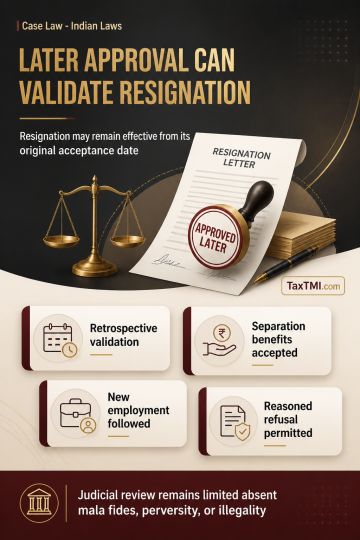
Ratification of resignation acceptance validates separation retrospectively, while withdrawal may be refused through reasoned administrative discretio...
Nature-dependent electricity contracts receive new Ind AS accounting, hedge designation, transition and financial-statement disclosure requirements fr...
Alternative GST remedy permitted protective writ intervention for ex parte adjudication, preserving independent appellate review of input tax credit d...
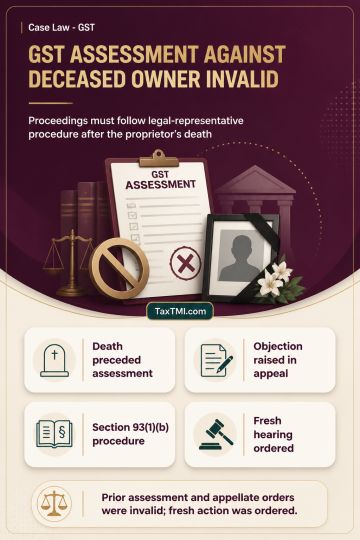
Assessment against deceased sole proprietor requires proceedings against the legal representative, rendering prior assessment and appellate orders inv...
Page of 4814
Press 'Enter' after typing page number.
421 to 440 of 96262 Results
❮
❯
❯❯
0 / 200
Expand Note
Add to Folder
No Folders have been created
+
Are you sure you want to delete "My most important" ?
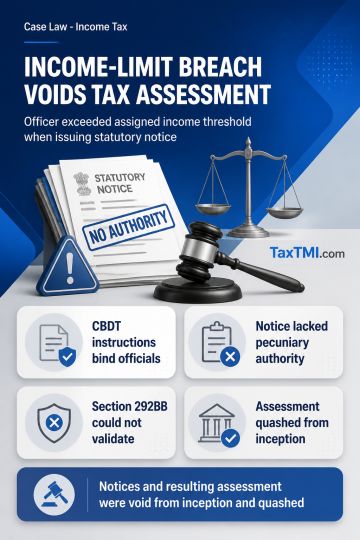
Pecuniary jurisdiction over statutory notices under section 143(2) must comply with CBDT instructions allocating cases by returned-income limits. Where an Income-tax Officer issues the notice despite the returned income exceeding that officer's prescribed limit, the defect concerns pecuniary rather than territorial jurisdiction; the territorial-jurisdiction objection rule does not apply. CBDT instructions bind the Department, and issue of a jurisdictional notice by an officer without pecuniary authority is an illegality, not a procedural irregularity capable of validation under section 292BB. The notices and consequential assessment were therefore treated as void from inception and quashed; other grounds remained academic.
Pecuniary jurisdiction over statutory notices under section 143(2) must comply with CBDT instructions allocating cases by returned-income limits. Where an Income-tax Officer issues the notice despite the returned income exceeding that officer's prescribed limit, the defect concerns pecuniary rather than territorial jurisdiction; the territorial-jurisdiction objection rule does not apply. CBDT instructions bind the Department, and issue of a jurisdictional notice by an officer without pecuniary authority is an illegality, not a procedural irregularity capable of validation under section 292BB. The notices and consequential assessment were therefore treated as void from inception and quashed; other grounds remained academic.
Note: It is a system-generated summary and is for quick reference only.
 TaxTMI
  TaxTMI
 of 4814


















 Join Channel