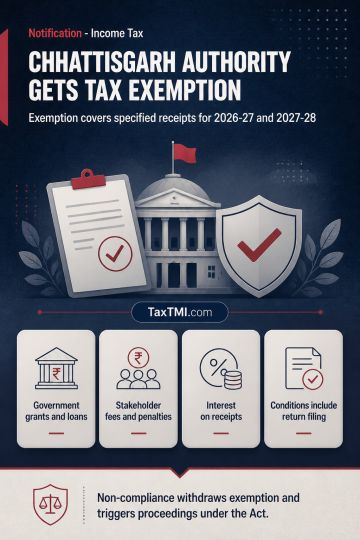
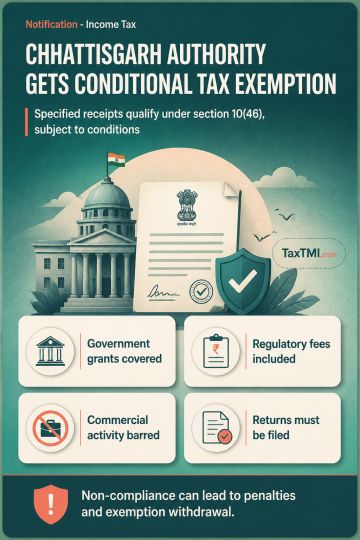
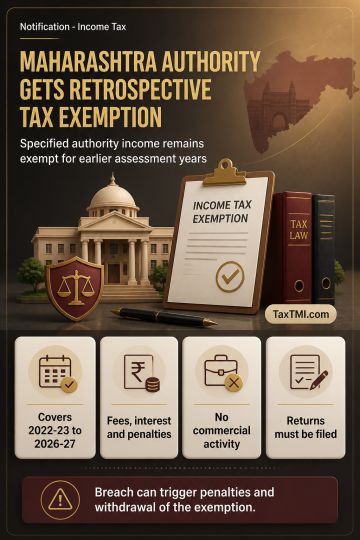
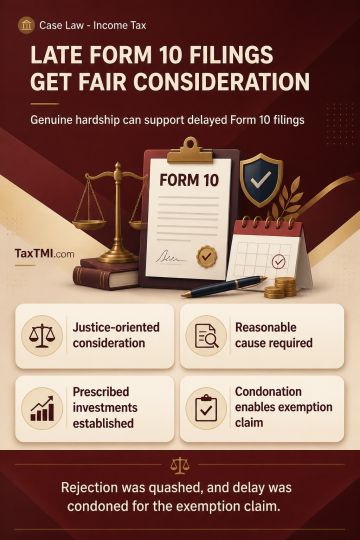
Specified regulatory authority income receives conditional tax exemption, subject to non-commercial activity, unchanged income character, and return f...
Tax exemption for regulatory authority income applies retrospectively, subject to non-commercial activity, unchanged income sources, and return-filing...
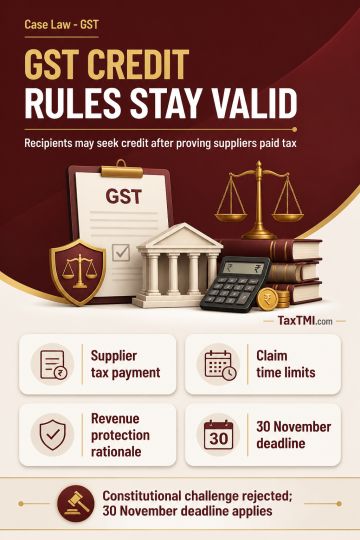
Input tax credit conditions remain constitutionally valid, with eligible recipient claims considered under GST circulars and retrospective filing dead...
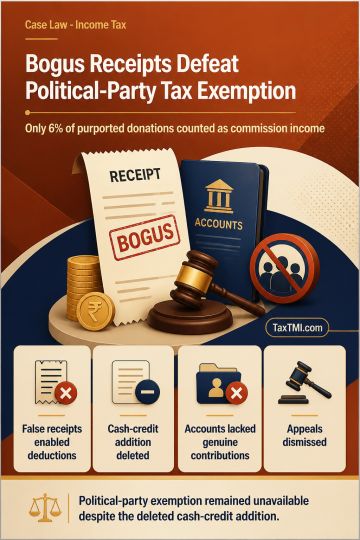
Bogus donation receipts justified commission income assessment and defeated political-party tax exemption for inaccurate accounts and reporting failur...
Pure reimbursement without income element escapes tax withholding, while delayed withholding and unsupported provisions face deferred or renewed scrut...
Public benefit requirement defeats charitable registration where residents' association services are reciprocal, member-only facilities governed by mu...
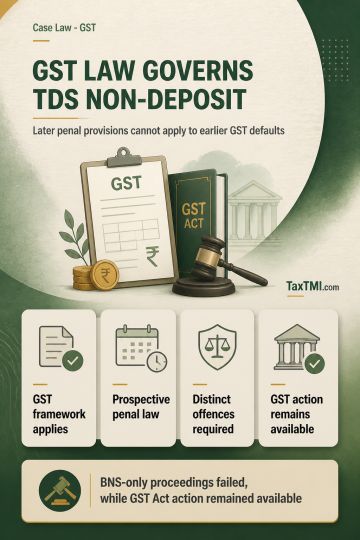
GST/TDS non-deposit arising from payments for Gram Sabha works falls primarily within the U.P. Goods and Services Tax Act, 2017, which provides a complete mechanism for determination of default, interest, penalty, prosecution and compounding. General penal provisions cannot be invoked unless allegations independently establish a distinct offence, such as dishonest misappropriation, forgery, cheating or wrongful gain. Substantive penal law applies prospectively: a penal provision introduced after the alleged 2017-18 default cannot create or alter the applicable offence. Proceedings based solely on Section 316(5) BNS were therefore unsustainable, while action under the GST Act remained available.
GST/TDS non-deposit arising from payments for Gram Sabha works falls primarily within the U.P. Goods and Services Tax Act, 2017, which provides a complete mechanism for determination of default, interest, penalty, prosecution and compounding. General penal provisions cannot be invoked unless allegations independently establish a distinct offence, such as dishonest misappropriation, forgery, cheating or wrongful gain. Substantive penal law applies prospectively: a penal provision introduced after the alleged 2017-18 default cannot create or alter the applicable offence. Proceedings based solely on Section 316(5) BNS were therefore unsustainable, while action under the GST Act remained available.
Note: It is a system-generated summary and is for quick reference only.
 TaxTMI
  TaxTMI
 of 4819










 Join Channel