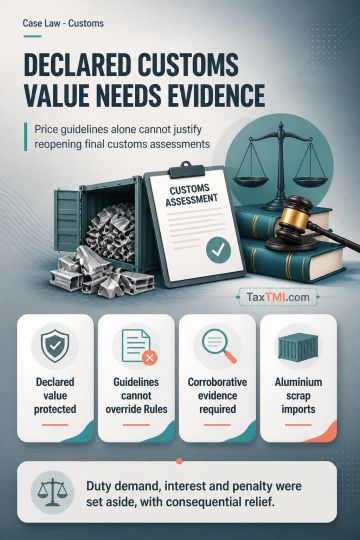
Transaction value cannot be rejected solely on non-statutory valuation guidelines without corroborative evidence supporting reassessment of final cust...
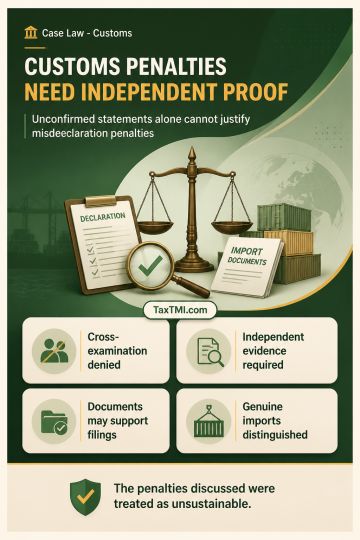
Cross-examination rights and corroborated evidence limit customs penalties for misdeclaration in genuine import transactions involving documented clea...
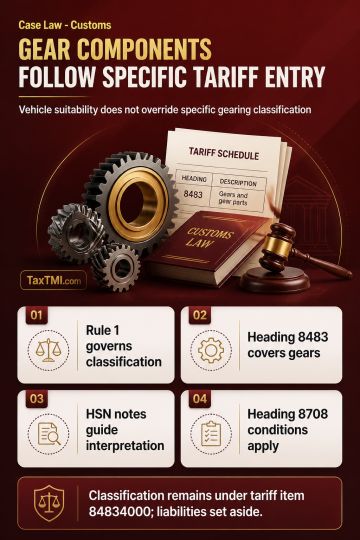
Tariff classification of vehicle gear components follows the specific gearing entry, displacing motor-vehicle parts classification and related liabili...
Necessary-party requirements limit impleadment of independent entities, while deferred consideration does not create an appealable adverse determinati...
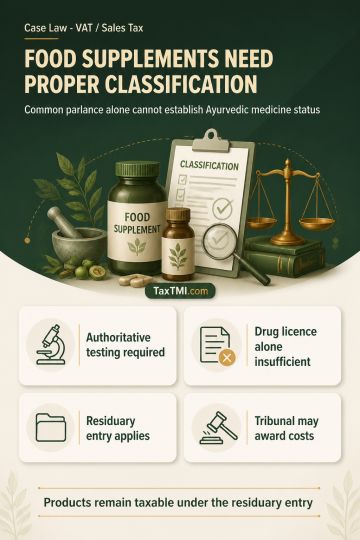
Food supplement classification requires common parlance and authoritative tests, preventing treatment as proprietary Ayurvedic medicines without suppo...
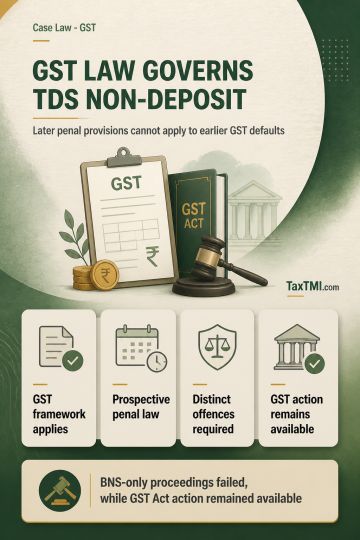
GST/TDS non-deposit arising from payments for Gram Sabha works falls primarily within the U.P. Goods and Services Tax Act, 2017, which provides a complete mechanism for determination of default, interest, penalty, prosecution and compounding. General penal provisions cannot be invoked unless allegations independently establish a distinct offence, such as dishonest misappropriation, forgery, cheating or wrongful gain. Substantive penal law applies prospectively: a penal provision introduced after the alleged 2017-18 default cannot create or alter the applicable offence. Proceedings based solely on Section 316(5) BNS were therefore unsustainable, while action under the GST Act remained available.
GST/TDS non-deposit arising from payments for Gram Sabha works falls primarily within the U.P. Goods and Services Tax Act, 2017, which provides a complete mechanism for determination of default, interest, penalty, prosecution and compounding. General penal provisions cannot be invoked unless allegations independently establish a distinct offence, such as dishonest misappropriation, forgery, cheating or wrongful gain. Substantive penal law applies prospectively: a penal provision introduced after the alleged 2017-18 default cannot create or alter the applicable offence. Proceedings based solely on Section 316(5) BNS were therefore unsustainable, while action under the GST Act remained available.
Note: It is a system-generated summary and is for quick reference only.
 TaxTMI
  TaxTMI
 of 4819









 Join Channel