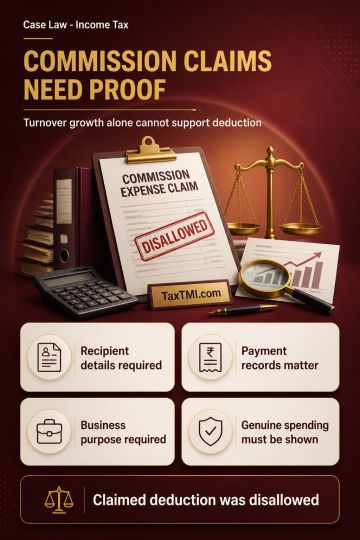
Business expenditure deduction requires proof of genuine commission payments and commercial allowability; turnover growth alone cannot validate the cl...
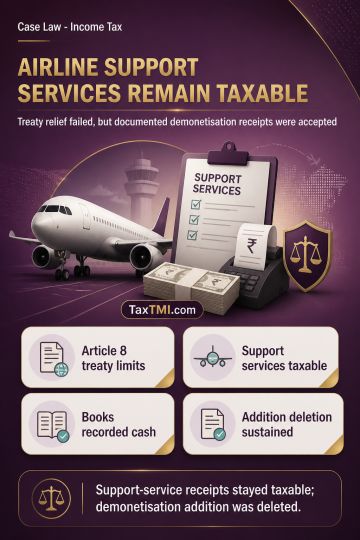
Article 8 treaty coverage excluded third-party airline support services, while documented demonetisation cash receipts remained accepted business inco...
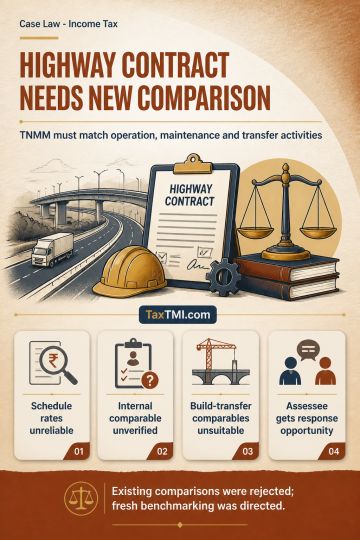
Functional comparability under TNMM requires highway contract benchmarks to reflect operation, maintenance and transfer activities, requiring fresh be...
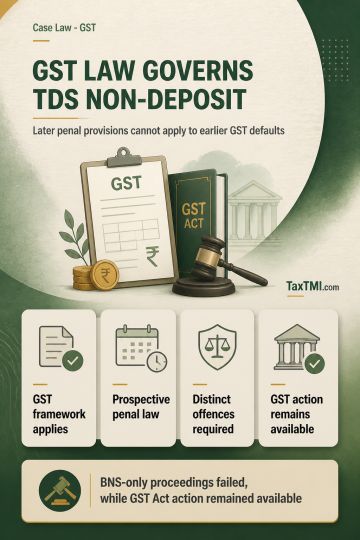
GST/TDS non-deposit arising from payments for Gram Sabha works falls primarily within the U.P. Goods and Services Tax Act, 2017, which provides a complete mechanism for determination of default, interest, penalty, prosecution and compounding. General penal provisions cannot be invoked unless allegations independently establish a distinct offence, such as dishonest misappropriation, forgery, cheating or wrongful gain. Substantive penal law applies prospectively: a penal provision introduced after the alleged 2017-18 default cannot create or alter the applicable offence. Proceedings based solely on Section 316(5) BNS were therefore unsustainable, while action under the GST Act remained available.
GST/TDS non-deposit arising from payments for Gram Sabha works falls primarily within the U.P. Goods and Services Tax Act, 2017, which provides a complete mechanism for determination of default, interest, penalty, prosecution and compounding. General penal provisions cannot be invoked unless allegations independently establish a distinct offence, such as dishonest misappropriation, forgery, cheating or wrongful gain. Substantive penal law applies prospectively: a penal provision introduced after the alleged 2017-18 default cannot create or alter the applicable offence. Proceedings based solely on Section 316(5) BNS were therefore unsustainable, while action under the GST Act remained available.
Note: It is a system-generated summary and is for quick reference only.
 TaxTMI
  TaxTMI
 of 4817




 Join Channel