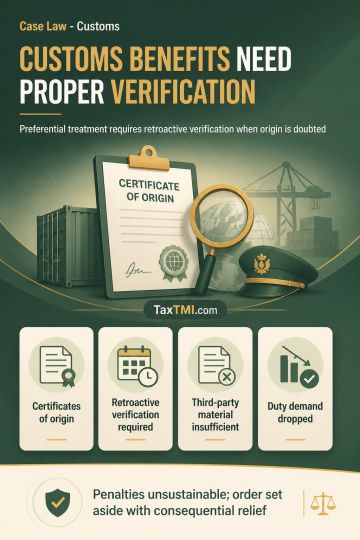
Certificate-of-origin verification procedure governs preferential customs benefits; denial without retroactive verification was set aside with consequ...
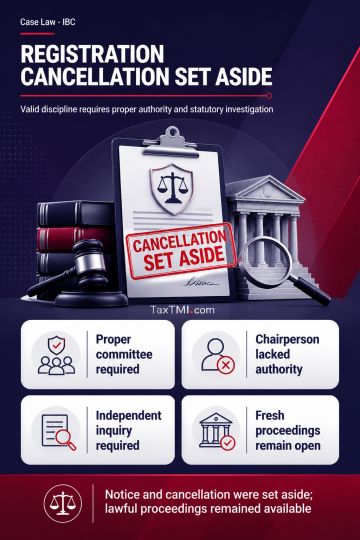
Disciplinary Committee jurisdiction and mandatory investigation requirements invalidated cancellation of an insolvency professional's registration and...
Retention of seized property survives where recorded reasons support proceeds of crime, while stayed investigation periods are excluded from limitatio...
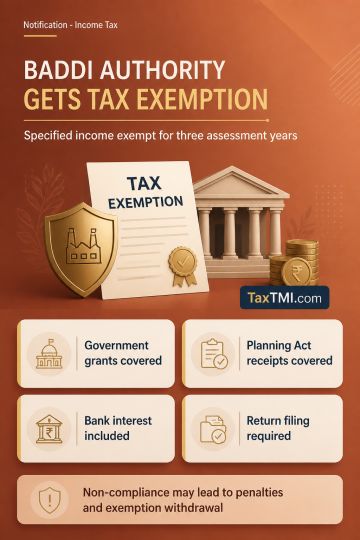
Specified income of Baddi Barotiwala Nalagarh Development Authority receives conditional tax exemption, retrospectively covering its designated assess...
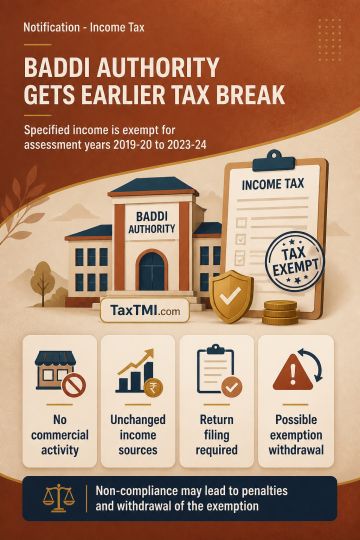
Specified development authority income receives retrospective tax exemption, subject to non-commercial activity, unchanged income sources, and return-...
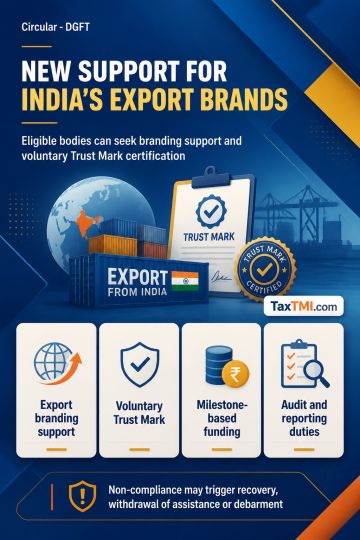
Unified Brand India framework introduces voluntary Trust Mark certification and funding support for export branding, packaging and global promotional ...
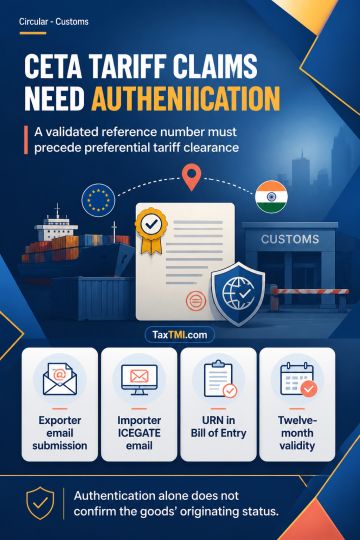
Origin Declaration authentication governs preferential tariff claims under India-UK CETA, requiring a validated reference number before import clearan...
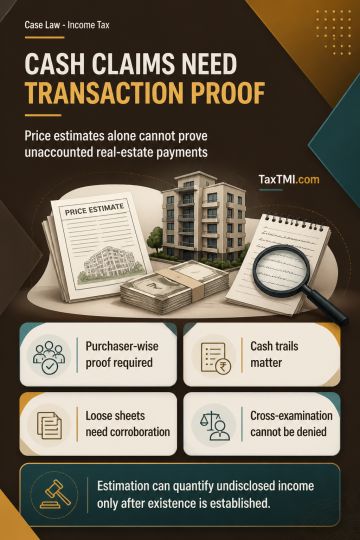
Additions for alleged unaccounted consideration in real-estate transactions require cogent, reliable and transaction-specific evidence of actual cash receipt or payment. Differing internal price references, ERP capabilities, employee statements, WhatsApp communications and an unsupported discount-based estimation cannot establish suppressed sale consideration without purchaser-wise proof, cash records, receipts, money trail or parallel books. Estimation may quantify undisclosed income only after its existence is established. Third-party loose sheets primarily attract statutory presumptions against their possessor; corroboration of recorded cheque payments does not prove an alleged cash component. Denial of cross-examination of the sheet's author is procedurally defective. Registered conveyances, books and banking trails remain effective affirmative evidence unless displaced by cogent material.
Additions for alleged unaccounted consideration in real-estate transactions require cogent, reliable and transaction-specific evidence of actual cash receipt or payment. Differing internal price references, ERP capabilities, employee statements, WhatsApp communications and an unsupported discount-based estimation cannot establish suppressed sale consideration without purchaser-wise proof, cash records, receipts, money trail or parallel books. Estimation may quantify undisclosed income only after its existence is established. Third-party loose sheets primarily attract statutory presumptions against their possessor; corroboration of recorded cheque payments does not prove an alleged cash component. Denial of cross-examination of the sheet's author is procedurally defective. Registered conveyances, books and banking trails remain effective affirmative evidence unless displaced by cogent material.
Note: It is a system-generated summary and is for quick reference only.
 TaxTMI
  TaxTMI
 of 4819












 Join Channel