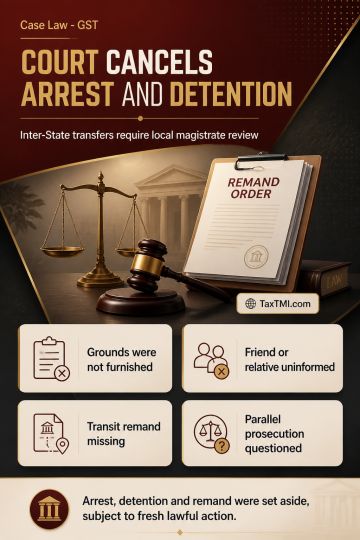
Arrest safeguards and transit remand requirements invalidated detention following inter-State transfer without communicated grounds or magistrate auth...
Arrest safeguards require disclosed grounds, relative intimation and transit remand, while duplicate prosecution under the CGST framework is unsustain...
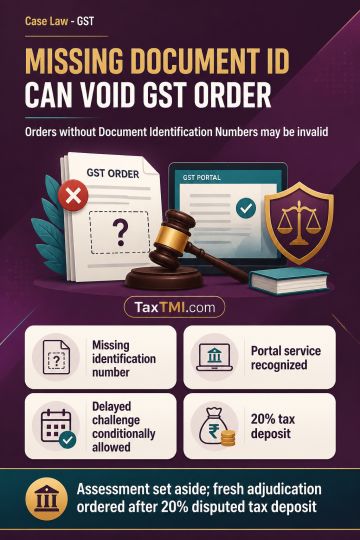
Document Identification Number defects can invalidate GST assessments, with delayed challenges entertained conditionally where patent irregularities e...
Windmill commissioning evidence supported higher depreciation where grid connection and electricity generation proved operational use before the relev...
The doctrine of merger applies where the Appellate Tribunal has passed a final order in an appeal: prior interlocutory orders, including a recall order, merge into the final appellate order and cease to have independent existence. A writ petition challenging the recall order therefore cannot survive once the final order is challenged through the available statutory tax appeal. The challenge to the final order must be pursued in that statutory appellate remedy, and the writ petition was dismissed.
The doctrine of merger applies where the Appellate Tribunal has passed a final order in an appeal: prior interlocutory orders, including a recall order, merge into the final appellate order and cease to have independent existence. A writ petition challenging the recall order therefore cannot survive once the final order is challenged through the available statutory tax appeal. The challenge to the final order must be pursued in that statutory appellate remedy, and the writ petition was dismissed.
Note: It is a system-generated summary and is for quick reference only.
 TaxTMI
  TaxTMI
 of 4814













 Join Channel