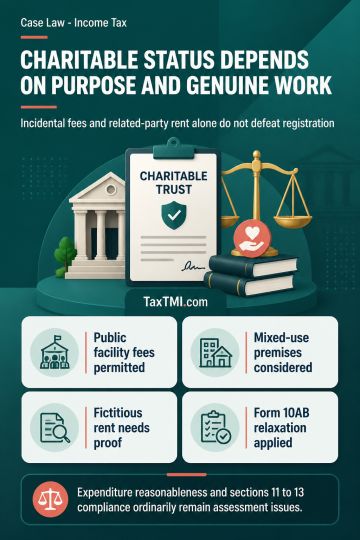
Charitable registration turns on predominant purpose and genuine activities, while incidental fees and related-party rent require supporting adverse m...
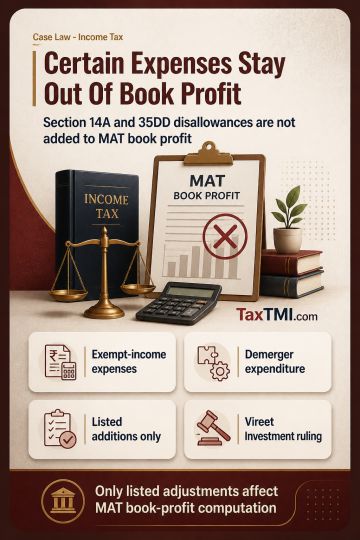
MAT book-profit adjustments exclude disallowances for exempt-income expenditure and demerger expenditure unless expressly listed under the statutory c...
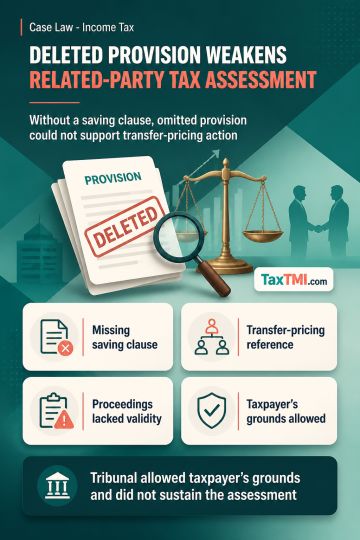
Omitted specified domestic transaction provision invalidates related-party expenditure transfer-pricing references and assessments based on consequent...
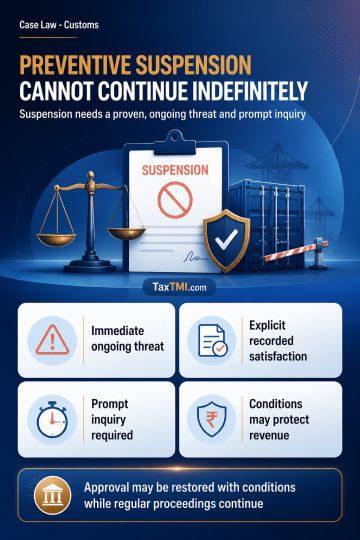
Preventive suspension requires an immediate continuing threat and cannot become indefinite without inquiry, fresh evidence, or proportionate safeguard...
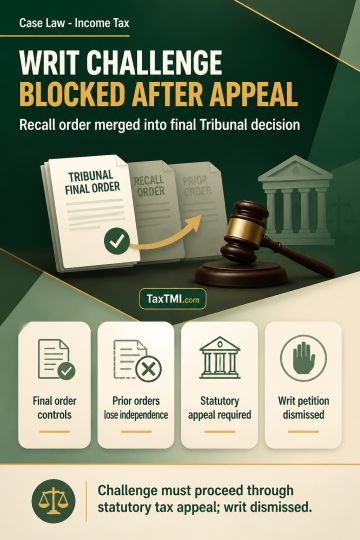
The doctrine of merger applies where the Appellate Tribunal has passed a final order in an appeal: prior interlocutory orders, including a recall order, merge into the final appellate order and cease to have independent existence. A writ petition challenging the recall order therefore cannot survive once the final order is challenged through the available statutory tax appeal. The challenge to the final order must be pursued in that statutory appellate remedy, and the writ petition was dismissed.
The doctrine of merger applies where the Appellate Tribunal has passed a final order in an appeal: prior interlocutory orders, including a recall order, merge into the final appellate order and cease to have independent existence. A writ petition challenging the recall order therefore cannot survive once the final order is challenged through the available statutory tax appeal. The challenge to the final order must be pursued in that statutory appellate remedy, and the writ petition was dismissed.
Note: It is a system-generated summary and is for quick reference only.
 TaxTMI
  TaxTMI
 of 4809












 Join Channel