Extended limitation fails without specific suppression allegations, while overseas employee secondment remains taxable as manpower supply within norma...
Time-share accommodation classification excludes Club or Association Service where purchasers receive contractual occupancy rights without genuine mem...
CENVAT credit for trading requires reversal, while taxable-service rental credit remains proportionately available and limitation issues await resolut...
Vicarious liability for dishonoured company cheques may extend to non-signatory directors where complaints contain foundational responsibility avermen...
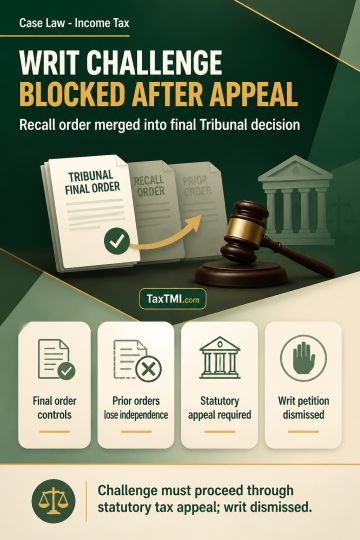
The doctrine of merger applies where the Appellate Tribunal has passed a final order in an appeal: prior interlocutory orders, including a recall order, merge into the final appellate order and cease to have independent existence. A writ petition challenging the recall order therefore cannot survive once the final order is challenged through the available statutory tax appeal. The challenge to the final order must be pursued in that statutory appellate remedy, and the writ petition was dismissed.
The doctrine of merger applies where the Appellate Tribunal has passed a final order in an appeal: prior interlocutory orders, including a recall order, merge into the final appellate order and cease to have independent existence. A writ petition challenging the recall order therefore cannot survive once the final order is challenged through the available statutory tax appeal. The challenge to the final order must be pursued in that statutory appellate remedy, and the writ petition was dismissed.
Note: It is a system-generated summary and is for quick reference only.
 TaxTMI
  TaxTMI
 of 4809









 Join Channel