Prolonged sterilisation of development rights supports capital-gains treatment, while business-income disallowances cannot govern capital-gains comput...
Additional evidence in transfer pricing dispute leads to fresh examination, while tax deductions, TDS credit, fee and refund interest require verifica...
Category II AIF pass-through taxation preserves non-business income character; investment receipts cannot be reclassified without applying recognised ...
Mutual fund maturity rules require proper rollover, redemption, disclosure, and due diligence; investor gains cannot excuse regulatory breaches or pen...
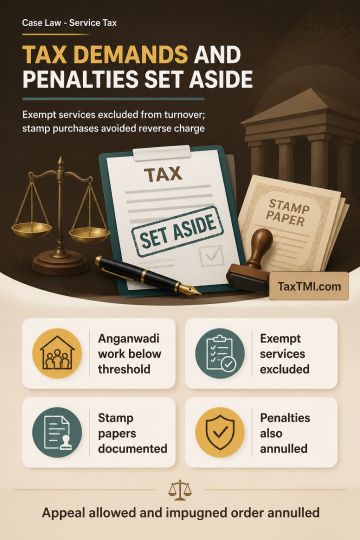
Threshold exemption excludes exempt services, while stamp-paper purchases avoid reverse charge; consequential service tax penalties were also set asid...
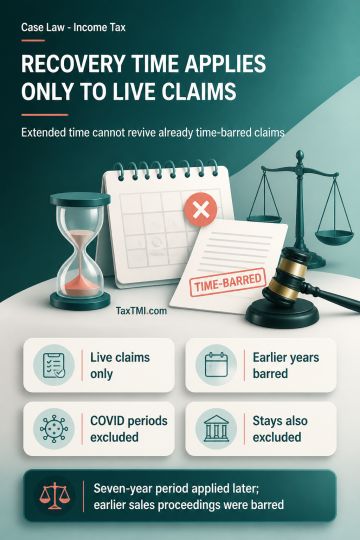
Extended limitation for sale of attached immovable property operates retrospectively as a procedural amendment only where the original limitation had not expired when the amendment took effect; it cannot revive already time-barred recovery claims. The seven-year period therefore applied to later assessment years whose unamended limitation remained alive, while sale proceedings for earlier time-barred years were barred. Tax Recovery Officer functions concerning attachment, sale proclamation and setting aside sales are quasi-judicial, allowing exclusion of the Supreme Court-prescribed COVID-19 limitation period and court-ordered stay periods. Where no appeal is filed, limitation under Rule 68B begins after expiry of the notice-of-demand period, when the assessment becomes final for recovery purposes.
Extended limitation for sale of attached immovable property operates retrospectively as a procedural amendment only where the original limitation had not expired when the amendment took effect; it cannot revive already time-barred recovery claims. The seven-year period therefore applied to later assessment years whose unamended limitation remained alive, while sale proceedings for earlier time-barred years were barred. Tax Recovery Officer functions concerning attachment, sale proclamation and setting aside sales are quasi-judicial, allowing exclusion of the Supreme Court-prescribed COVID-19 limitation period and court-ordered stay periods. Where no appeal is filed, limitation under Rule 68B begins after expiry of the notice-of-demand period, when the assessment becomes final for recovery purposes.
Note: It is a system-generated summary and is for quick reference only.
 TaxTMI
  TaxTMI
 of 4817














 Join Channel