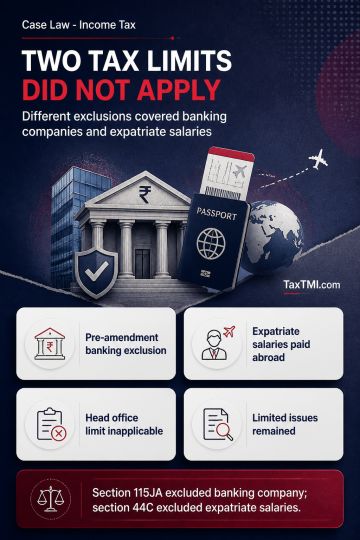
Minimum alternate tax exclusions for pre-amendment banking companies and expatriate Indian branch salaries remain outside head office expenditure limi...
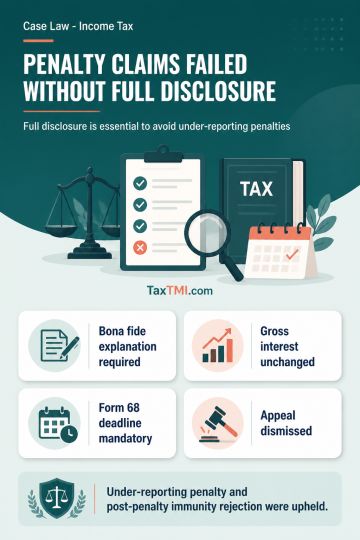
Bona fide disclosure requirements govern under-reporting penalties, and post-penalty immunity applications cannot secure available statutory protectio...
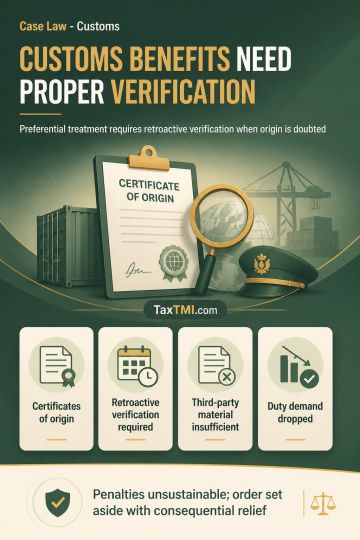
Certificate-of-origin verification procedure governs preferential customs benefits; denial without retroactive verification was set aside with consequ...
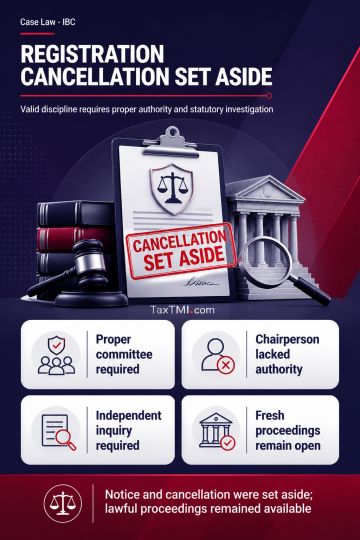
Disciplinary Committee jurisdiction and mandatory investigation requirements invalidated cancellation of an insolvency professional's registration and...
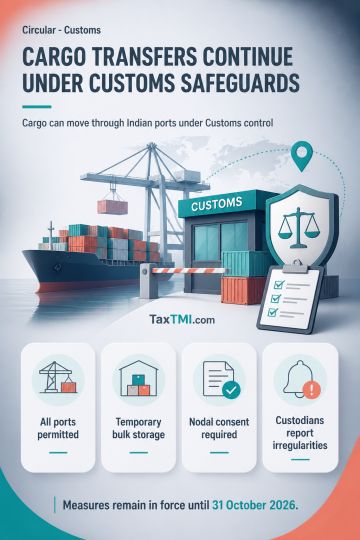
International transhipment of FCL and LCL cargo is permitted...
International cargo transhipment through Indian ports continues with Customs-controlled storage, re-export safeguards, and coordinated multi-station movement procedures.
Contents
Summary
Note
Bookmark
Share
✓ Copied successfully !
Print
Print Options
For full text, please login
Login to TaxTMI
Verification Pending
The Email Id has not been verified. Click on the link we have sent on
International transhipment of FCL and LCL cargo is permitted from all seaports and international airports, including movement through other Customs stations, subject to the Customs Act and applicable rules. Liquid bulk, break bulk and solid/dry bulk cargo diverted to Indian ports may be temporarily unloaded, stored and transhipped or re-exported with case-specific permission, Customs supervision, secure custody, inventory controls, testing and safeguards against home consumption or diversion. Multi-station transhipment requires prior nodal-officer consent and controlled movement. Custodians remain responsible for cargo security, handling, accounting and reporting irregularities. These measures operate until 31 October 2026.
International transhipment of FCL and LCL cargo is permitted from all seaports and international airports, including movement through other Customs stations, subject to the Customs Act and applicable rules. Liquid bulk, break bulk and solid/dry bulk cargo diverted to Indian ports may be temporarily unloaded, stored and transhipped or re-exported with case-specific permission, Customs supervision, secure custody, inventory controls, testing and safeguards against home consumption or diversion. Multi-station transhipment requires prior nodal-officer consent and controlled movement. Custodians remain responsible for cargo security, handling, accounting and reporting irregularities. These measures operate until 31 October 2026.
Note: It is a system-generated summary and is for quick reference only.
 TaxTMI
  TaxTMI
 of 4816








 Join Channel