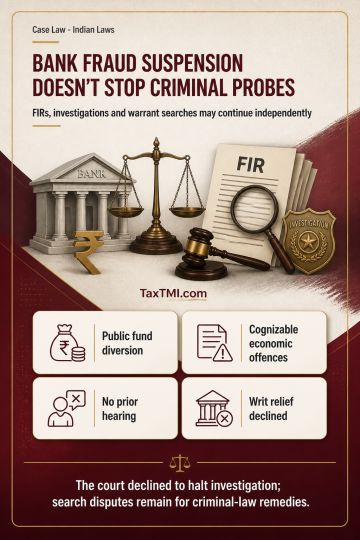
Administrative fraud classification suspension does not halt independent criminal investigation or warrant-based searches into alleged economic offenc...
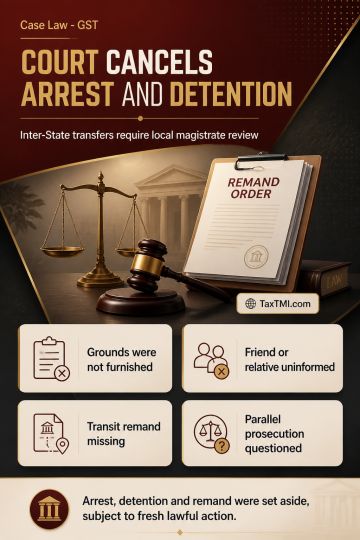
Arrest safeguards and transit remand requirements invalidated detention following inter-State transfer without communicated grounds or magistrate auth...
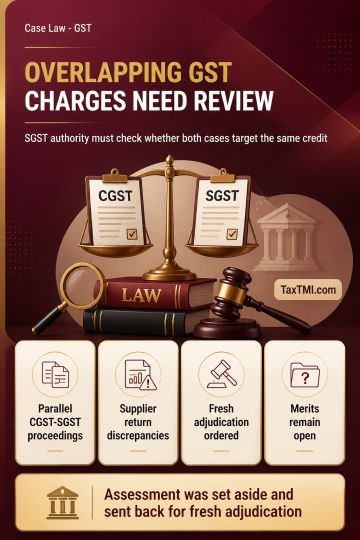
Arrest safeguards require disclosed grounds, relative intimation and transit remand, while duplicate prosecution under the CGST framework is unsustain...
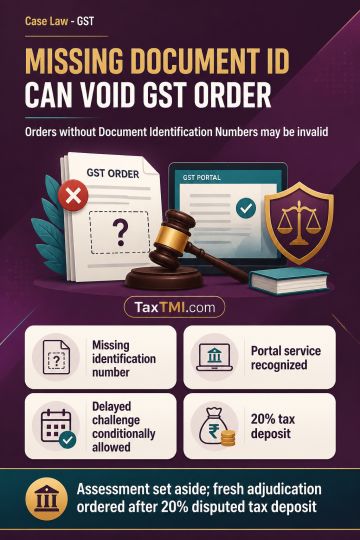
Document Identification Number defects can invalidate GST assessments, with delayed challenges entertained conditionally where patent irregularities e...
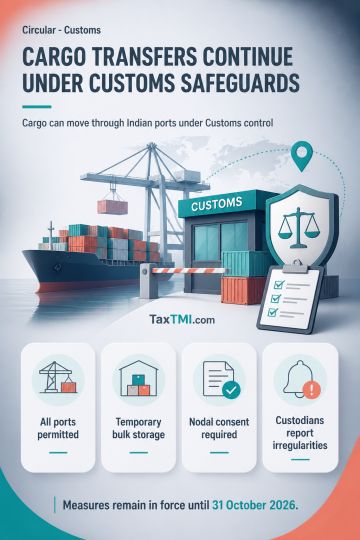
International transhipment of FCL and LCL cargo is permitted...
International cargo transhipment through Indian ports continues with Customs-controlled storage, re-export safeguards, and coordinated multi-station movement procedures.
Contents
Summary
Note
Bookmark
Share
✓ Copied successfully !
Print
Print Options
For full text, please login
Login to TaxTMI
Verification Pending
The Email Id has not been verified. Click on the link we have sent on
International transhipment of FCL and LCL cargo is permitted from all seaports and international airports, including movement through other Customs stations, subject to the Customs Act and applicable rules. Liquid bulk, break bulk and solid/dry bulk cargo diverted to Indian ports may be temporarily unloaded, stored and transhipped or re-exported with case-specific permission, Customs supervision, secure custody, inventory controls, testing and safeguards against home consumption or diversion. Multi-station transhipment requires prior nodal-officer consent and controlled movement. Custodians remain responsible for cargo security, handling, accounting and reporting irregularities. These measures operate until 31 October 2026.
International transhipment of FCL and LCL cargo is permitted from all seaports and international airports, including movement through other Customs stations, subject to the Customs Act and applicable rules. Liquid bulk, break bulk and solid/dry bulk cargo diverted to Indian ports may be temporarily unloaded, stored and transhipped or re-exported with case-specific permission, Customs supervision, secure custody, inventory controls, testing and safeguards against home consumption or diversion. Multi-station transhipment requires prior nodal-officer consent and controlled movement. Custodians remain responsible for cargo security, handling, accounting and reporting irregularities. These measures operate until 31 October 2026.
Note: It is a system-generated summary and is for quick reference only.
 TaxTMI
  TaxTMI
 of 4811









 Join Channel