Advance-ruling mechanism governs pending GST classification, exemption and taxability disputes, limiting writ review once the specialised forum functi...
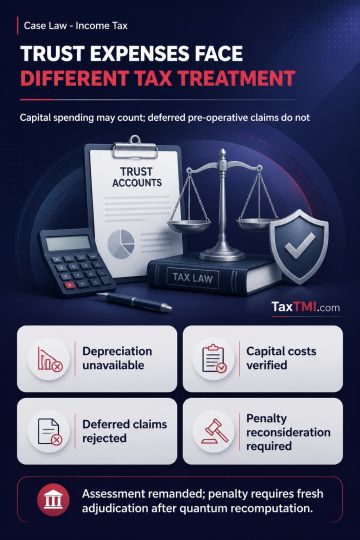
Charitable trust income application permits verified capital expenditure but rejects deferred pre-operative claims and requires reconsideration of con...
Reinsurance premium deductions require established regulatory breaches, while independently acquired software qualifies within the computer depreciati...
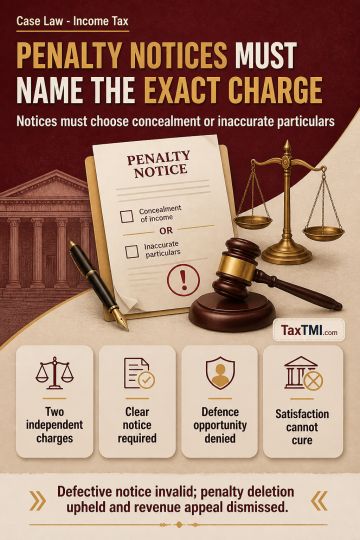
Penalty notices under section 271(1)(c) must clearly identify whether the charge concerns concealment of income or furnishing inaccurate particulars. The two limbs are independent and may require different explanations and treatment; therefore, a notice retaining both alternatives without specifying the applicable limb denies the assessee a proper opportunity to defend. Recording satisfaction to initiate penalty proceedings does not cure this defect. Applying this principle, the High Court treated the defective notice as invalid, upheld deletion of the penalty, and dismissed the revenue's appeal.
Penalty notices under section 271(1)(c) must clearly identify whether the charge concerns concealment of income or furnishing inaccurate particulars. The two limbs are independent and may require different explanations and treatment; therefore, a notice retaining both alternatives without specifying the applicable limb denies the assessee a proper opportunity to defend. Recording satisfaction to initiate penalty proceedings does not cure this defect. Applying this principle, the High Court treated the defective notice as invalid, upheld deletion of the penalty, and dismissed the revenue's appeal.
Note: It is a system-generated summary and is for quick reference only.
 TaxTMI
  TaxTMI
 of 4809















 Join Channel