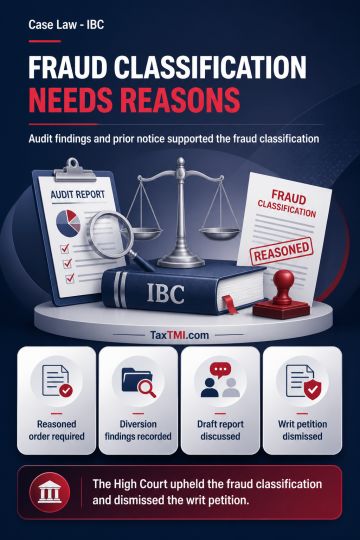
Independent show-cause notices remain separate proceedings, while customs adjudication challenges should ordinarily follow the statutory appellate rem...
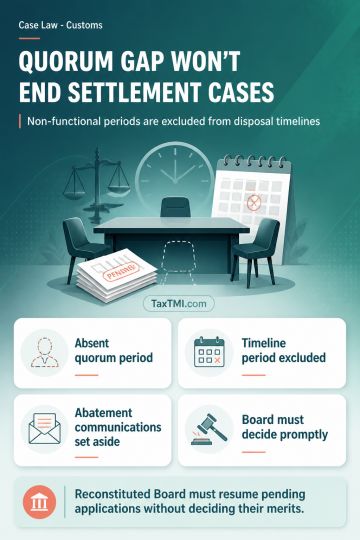
Institutional incapacity in customs settlement proceedings excludes non-functional quorum periods from statutory disposal timelines, preventing automa...
Interactive touchscreen panels with integrated computing functions fall under automatic data-processing machines rather than display monitors for cust...
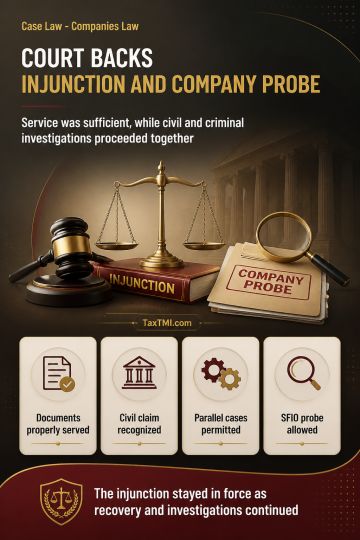
Ex parte injunction service requirements were substantially met, while civil recovery and SFIO investigation into provident fund defalcation continued...
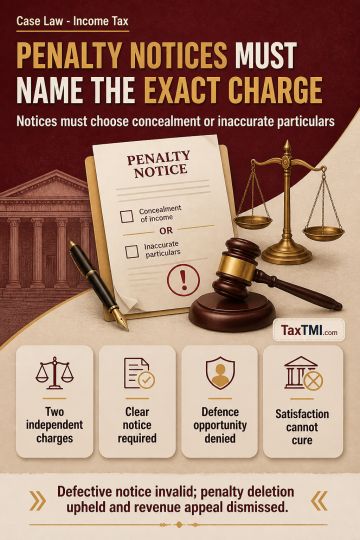
Penalty notices under section 271(1)(c) must clearly identify whether the charge concerns concealment of income or furnishing inaccurate particulars. The two limbs are independent and may require different explanations and treatment; therefore, a notice retaining both alternatives without specifying the applicable limb denies the assessee a proper opportunity to defend. Recording satisfaction to initiate penalty proceedings does not cure this defect. Applying this principle, the High Court treated the defective notice as invalid, upheld deletion of the penalty, and dismissed the revenue's appeal.
Penalty notices under section 271(1)(c) must clearly identify whether the charge concerns concealment of income or furnishing inaccurate particulars. The two limbs are independent and may require different explanations and treatment; therefore, a notice retaining both alternatives without specifying the applicable limb denies the assessee a proper opportunity to defend. Recording satisfaction to initiate penalty proceedings does not cure this defect. Applying this principle, the High Court treated the defective notice as invalid, upheld deletion of the penalty, and dismissed the revenue's appeal.
Note: It is a system-generated summary and is for quick reference only.
 TaxTMI
 of 4805
















 Join Channel


 TaxTMI