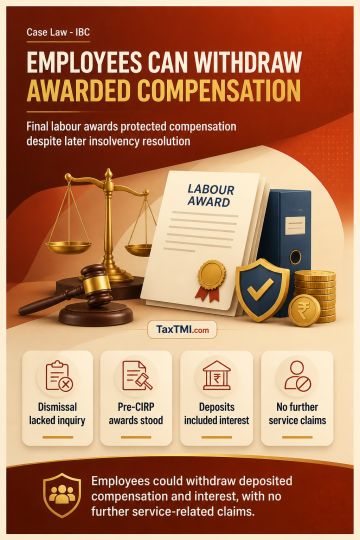
Natural justice and pre-CIRP labour awards protect termination compensation, permitting withdrawal of court deposits despite later insolvency resoluti...
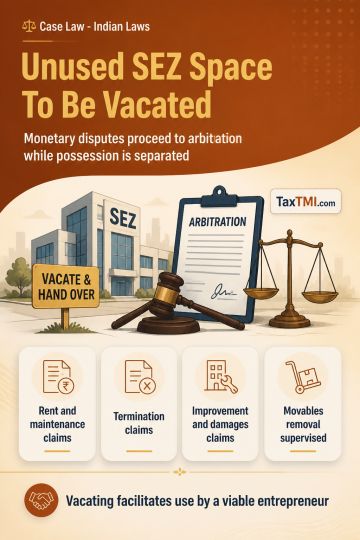
Arbitration of SEZ sub-lease monetary claims preserves rent, maintenance, termination, improvements and damages disputes while unused premises are vac...
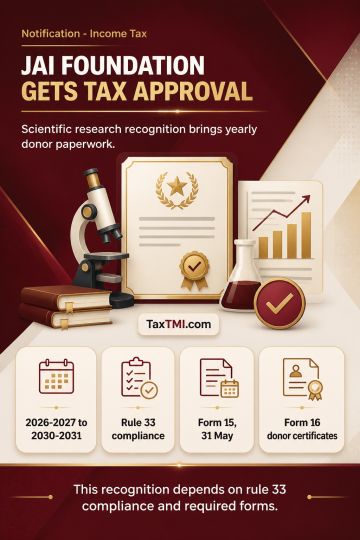
Scientific research approval grants a research association tax recognition, subject to annual donor reporting, certification, and regulatory complianc...
Tax-audit obligations do not arise where turnover remains below...
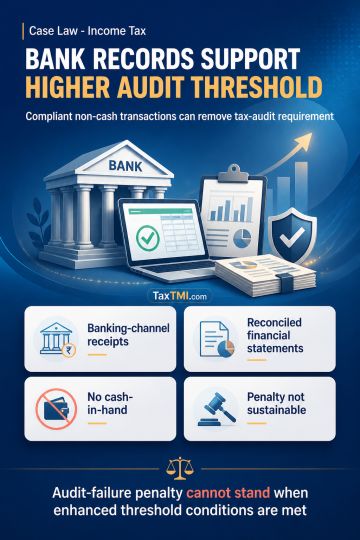
Enhanced tax-audit threshold applies where banking records establish compliant non-cash receipts and payments, eliminating penalty exposure for audit failure.
Contents
Summary
Note
Bookmark
Share
✓ Copied successfully !
Print
Print Options
For full text, please login
Login to TaxTMI
Verification Pending
The Email Id has not been verified. Click on the link we have sent on
Tax-audit obligations do not arise where turnover remains below the enhanced threshold available to taxpayers whose cash receipts and cash payments stay within prescribed limits. Financial statements, bank statements and reconciliation may establish that operational revenue was received through banking channels; differences between bank credits and reported revenue may be attributable to GST and tax deducted at source. Absence of opening or closing cash-in-hand, supported by these records and the tax audit report, can demonstrate that no disqualifying cash transactions occurred. Consequently, penalty for failure to obtain a tax audit is not sustainable where the enhanced threshold applies.
Tax-audit obligations do not arise where turnover remains below the enhanced threshold available to taxpayers whose cash receipts and cash payments stay within prescribed limits. Financial statements, bank statements and reconciliation may establish that operational revenue was received through banking channels; differences between bank credits and reported revenue may be attributable to GST and tax deducted at source. Absence of opening or closing cash-in-hand, supported by these records and the tax audit report, can demonstrate that no disqualifying cash transactions occurred. Consequently, penalty for failure to obtain a tax audit is not sustainable where the enhanced threshold applies.
Note: It is a system-generated summary and is for quick reference only.
 TaxTMI
  TaxTMI
 of 4888