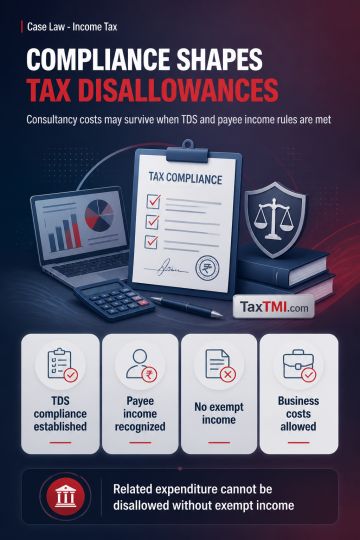
Tax deduction compliance and payee income recognition govern consultancy disallowance, while no exempt income prevents related expenditure disallowanc...
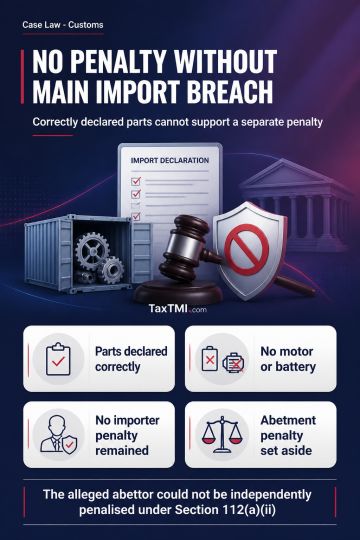
Derivative abetment liability fails when correctly declared imported components establish no underlying improper importation by the principal importer...
Page of 4805
Press 'Enter' after typing page number.
701 to 720 of 96100 Results
❮
❯
❯❯
0 / 200
Expand Note
Add to Folder
No Folders have been created
+
Are you sure you want to delete "My most important" ?
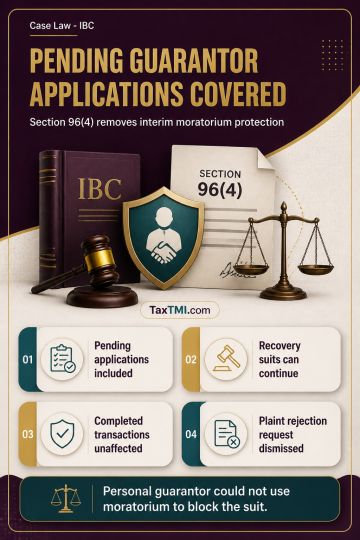
Section 96(4) of the Insolvency and Bankruptcy Code applies retroactively to pending insolvency applications involving personal guarantors to corporate debtors. The exclusion removes the pre-admission interim moratorium that could otherwise delay recovery proceedings; it affects pending transactions rather than completed transactions. The phrase "is filed" includes applications filed before the amendment's commencement but still pending thereafter. Consequently, the personal guarantor could not rely on an interim moratorium to bar the suit, and the request to reject the plaint on that basis was dismissed.
Section 96(4) of the Insolvency and Bankruptcy Code applies retroactively to pending insolvency applications involving personal guarantors to corporate debtors. The exclusion removes the pre-admission interim moratorium that could otherwise delay recovery proceedings; it affects pending transactions rather than completed transactions. The phrase "is filed" includes applications filed before the amendment's commencement but still pending thereafter. Consequently, the personal guarantor could not rely on an interim moratorium to bar the suit, and the request to reject the plaint on that basis was dismissed.
Note: It is a system-generated summary and is for quick reference only.
 TaxTMI
 of 4805












 Join Channel


 TaxTMI