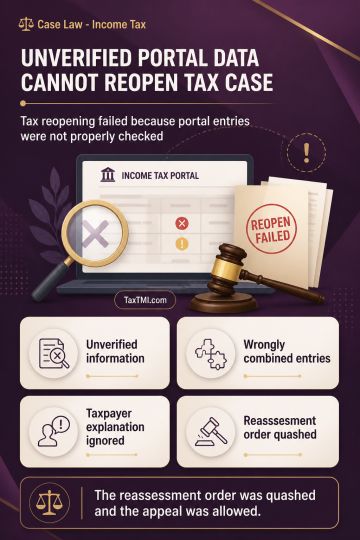
Reassessment jurisdiction fails where unverified portal information is aggregated without examining the taxpayer's explanation or relevance of entries...
Statutory sanction for delayed reassessment requires approval from the prescribed authority; approval by an inferior authority invalidates jurisdictio...
Transfer pricing margin adjustments require matching treatment of non-operating income and related costs, with comparability issues reconsidered on ev...
Preliminary-expense amortisation and MAT exempt-income adjustments prevailed, while trademark costs and managerial remuneration require fresh verifica...
Export valuation requires contemporaneous evidence; unrelated invoices cannot prove overvaluation, and dual penalties on firm and partner are impermis...
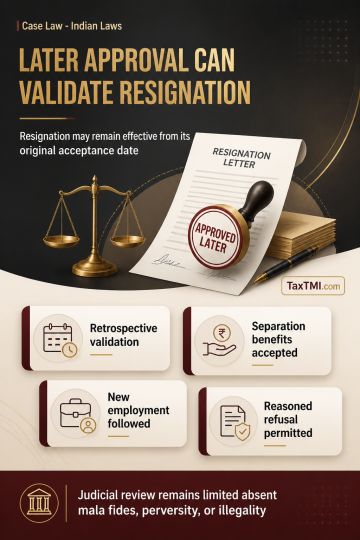
Ratification of resignation acceptance validates separation retrospectively, while withdrawal may be refused through reasoned administrative discretio...
Nature-dependent electricity contracts receive new Ind AS accounting, hedge designation, transition and financial-statement disclosure requirements fr...
Page of 4805
Press 'Enter' after typing page number.
241 to 260 of 96092 Results
❮
❯
❯❯
0 / 200
Expand Note
Add to Folder
No Folders have been created
+
Are you sure you want to delete "My most important" ?
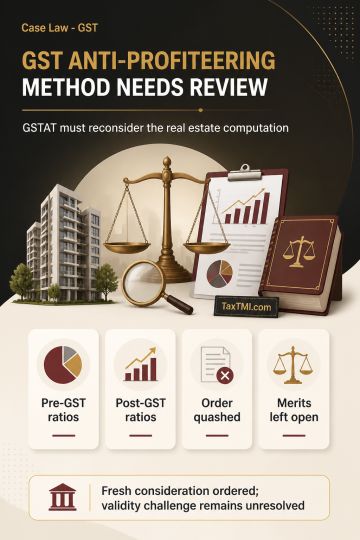
Anti-profiteering computation for real estate projects based on pre-GST and post-GST input-tax-credit-to-turnover ratios requires reconsideration in light of the Delhi High Court's determination on the applicable methodology. The High Court quashed the anti-profiteering order and remanded the computation issue to GSTAT for fresh consideration under that determination. It expressed no view on the merits, kept all parties' contentions open, and left the challenge to the validity of the statutory provision and rules unresolved.
Anti-profiteering computation for real estate projects based on pre-GST and post-GST input-tax-credit-to-turnover ratios requires reconsideration in light of the Delhi High Court's determination on the applicable methodology. The High Court quashed the anti-profiteering order and remanded the computation issue to GSTAT for fresh consideration under that determination. It expressed no view on the merits, kept all parties' contentions open, and left the challenge to the validity of the statutory provision and rules unresolved.
Note: It is a system-generated summary and is for quick reference only.
 TaxTMI
 of 4805

















 Join Channel


 TaxTMI