Origin Declaration authentication governs preferential tariff claims under India-UK CETA, requiring a validated reference number before import clearan...
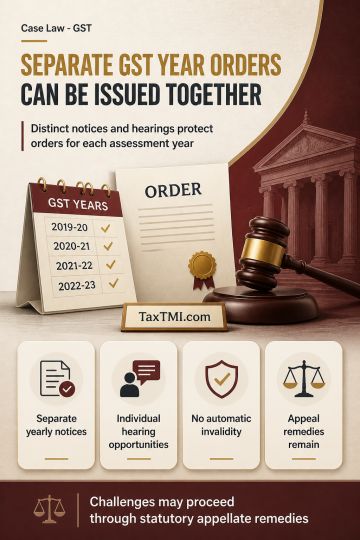
Separate assessment orders for different years remain valid when distinct notices and hearing opportunities prevent prejudice from combined proceeding...
Defined public benefit can retain charitable character; registration renewal requires examining genuine activities and legal compliance, not surplus a...
Capital reduction is distinct from share buy-back, preventing buy-back tax; restructuring interest and related business deductions also survive scruti...
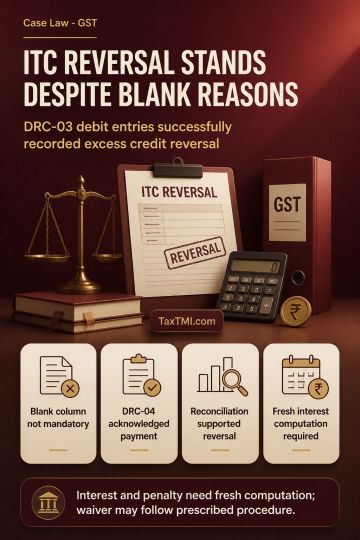
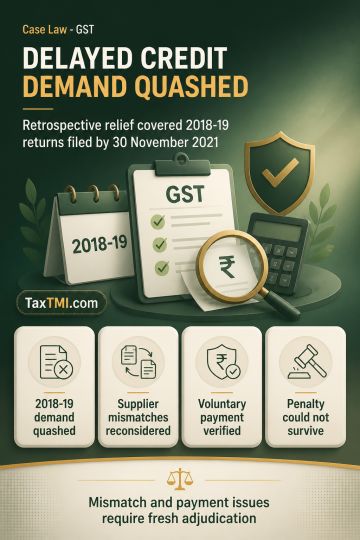
Excess input tax credit relating to invoices for FY 2018-19 to 2020-21 was treated as validly reversed through debit entries in the electronic cash and credit ledgers reported in Form GST DRC-03. Absence of reasons in column 8 did not invalidate the reversal, as that field was not mandatory; Form GST DRC-04 acknowledged payment and the reconciliation statement supported full reversal. Section 16(5) extended the relevant ITC entitlement. For a Section 73 demand within Section 128A, interest and penalty require fresh computation after hearing, with waiver available subject to the prescribed procedure.
Excess input tax credit relating to invoices for FY 2018-19 to 2020-21 was treated as validly reversed through debit entries in the electronic cash and credit ledgers reported in Form GST DRC-03. Absence of reasons in column 8 did not invalidate the reversal, as that field was not mandatory; Form GST DRC-04 acknowledged payment and the reconciliation statement supported full reversal. Section 16(5) extended the relevant ITC entitlement. For a Section 73 demand within Section 128A, interest and penalty require fresh computation after hearing, with waiver available subject to the prescribed procedure.
Note: It is a system-generated summary and is for quick reference only.
 TaxTMI
  TaxTMI
 of 4811

















 Join Channel