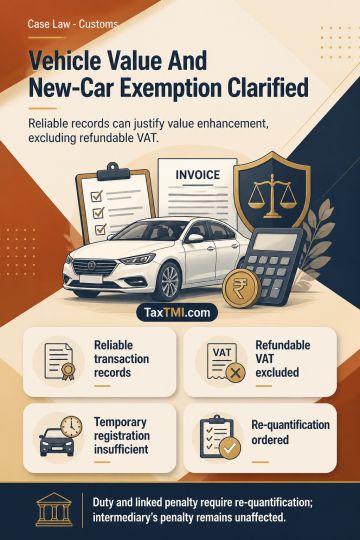
Transaction value rejection requires reliable corroboration; refundable VAT is excluded and temporary registration does not defeat new-vehicle exempti...
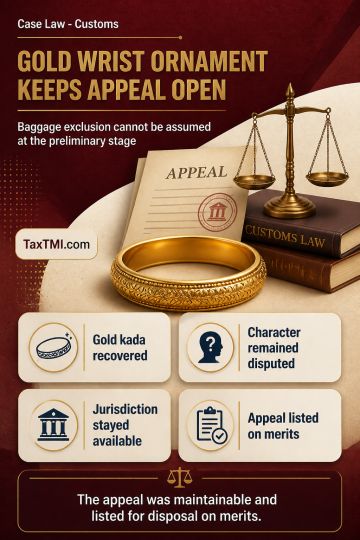
Appellate jurisdiction remains available where a wrist-worn gold ornament cannot conclusively be characterised as imported baggage at the preliminary ...
Written complaint requirement bars cognizance on police reports for securities offences, while unsupported breach of trust and cheating allegations fa...
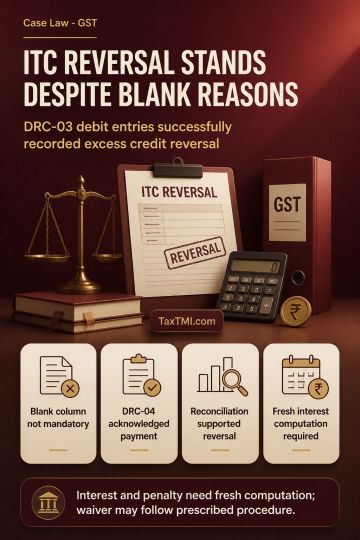
Excess input tax credit relating to invoices for FY 2018-19 to 2020-21 was treated as validly reversed through debit entries in the electronic cash and credit ledgers reported in Form GST DRC-03. Absence of reasons in column 8 did not invalidate the reversal, as that field was not mandatory; Form GST DRC-04 acknowledged payment and the reconciliation statement supported full reversal. Section 16(5) extended the relevant ITC entitlement. For a Section 73 demand within Section 128A, interest and penalty require fresh computation after hearing, with waiver available subject to the prescribed procedure.
Excess input tax credit relating to invoices for FY 2018-19 to 2020-21 was treated as validly reversed through debit entries in the electronic cash and credit ledgers reported in Form GST DRC-03. Absence of reasons in column 8 did not invalidate the reversal, as that field was not mandatory; Form GST DRC-04 acknowledged payment and the reconciliation statement supported full reversal. Section 16(5) extended the relevant ITC entitlement. For a Section 73 demand within Section 128A, interest and penalty require fresh computation after hearing, with waiver available subject to the prescribed procedure.
Note: It is a system-generated summary and is for quick reference only.
 TaxTMI
 of 4805






 Join Channel


 TaxTMI
