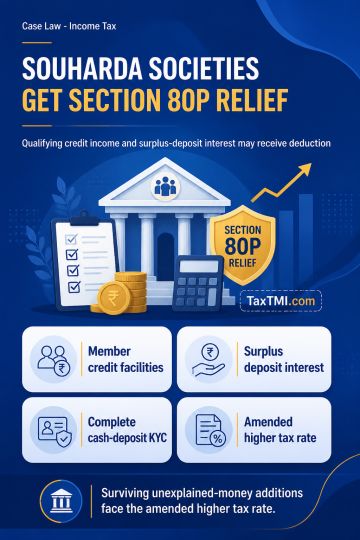
Section 80P deduction covers Souharda credit societies, including qualifying surplus-deposit interest, subject to member KYC verification for cash dep...
Transfer-pricing benchmarking and capital-receipt principles sustained taxpayer relief, while unsupported property-advance write-offs remained disallo...
Pre-existing operational debt disputes require genuine evidence, while undirected running-account payments may be appropriated on a first-in-first-out...
Agency in CNG distribution makes outlet operators commission agents, rendering taxable Business Auxiliary Service rather than purchasing goods for res...
Page of 4809
Press 'Enter' after typing page number.
1121 to 1140 of 96174 Results
❮
❯
❯❯
0 / 200
Expand Note
Add to Folder
No Folders have been created
+
Are you sure you want to delete "My most important" ?
Importers using transferable duty credit scrips through authorised customs clearance agents remain responsible for acts performed within the agent's authority when they retain the resulting duty benefit. Bona fide purchaser protection requires good faith and reasonable verification of a scrip's genuineness, validity and available credit; caveat emptor places that due-diligence burden on the importer. Incorrect Bill of Entry declarations and failure to investigate irregular clearance arrangements undermine that protection. Natural justice requires demonstrable prejudice: non-production of original scrips or denial of cross-examination does not invalidate proceedings where independent entitlement, transaction and investigation evidence establishes the facts. Fraud-related short-levy penalties may apply despite no personal execution of EDI manipulation, but separate overlapping penalties are mutually exclusive.
Importers using transferable duty credit scrips through authorised customs clearance agents remain responsible for acts performed within the agent's authority when they retain the resulting duty benefit. Bona fide purchaser protection requires good faith and reasonable verification of a scrip's genuineness, validity and available credit; caveat emptor places that due-diligence burden on the importer. Incorrect Bill of Entry declarations and failure to investigate irregular clearance arrangements undermine that protection. Natural justice requires demonstrable prejudice: non-production of original scrips or denial of cross-examination does not invalidate proceedings where independent entitlement, transaction and investigation evidence establishes the facts. Fraud-related short-levy penalties may apply despite no personal execution of EDI manipulation, but separate overlapping penalties are mutually exclusive.
Note: It is a system-generated summary and is for quick reference only.
 TaxTMI
  TaxTMI
 of 4809
















 Join Channel