Specified regulatory authority income receives conditional tax exemption, subject to non-commercial activity, unchanged income character, and return f...
Tax exemption for regulatory authority income applies retrospectively, subject to non-commercial activity, unchanged income sources, and return-filing...
Input tax credit conditions remain constitutionally valid, with eligible recipient claims considered under GST circulars and retrospective filing dead...
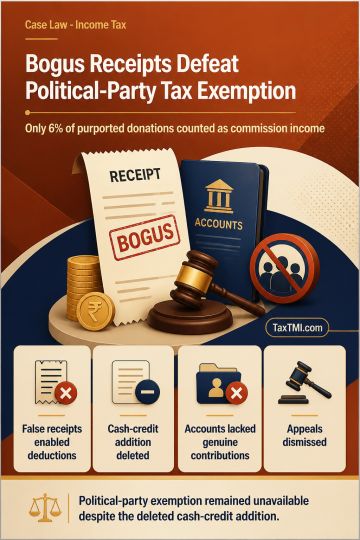
Bogus donation receipts justified commission income assessment and defeated political-party tax exemption for inaccurate accounts and reporting failur...
Pure reimbursement without income element escapes tax withholding, while delayed withholding and unsupported provisions face deferred or renewed scrut...
Public benefit requirement defeats charitable registration where residents' association services are reciprocal, member-only facilities governed by mu...
Importers using transferable duty credit scrips through authorised customs clearance agents remain responsible for acts performed within the agent's authority when they retain the resulting duty benefit. Bona fide purchaser protection requires good faith and reasonable verification of a scrip's genuineness, validity and available credit; caveat emptor places that due-diligence burden on the importer. Incorrect Bill of Entry declarations and failure to investigate irregular clearance arrangements undermine that protection. Natural justice requires demonstrable prejudice: non-production of original scrips or denial of cross-examination does not invalidate proceedings where independent entitlement, transaction and investigation evidence establishes the facts. Fraud-related short-levy penalties may apply despite no personal execution of EDI manipulation, but separate overlapping penalties are mutually exclusive.
Importers using transferable duty credit scrips through authorised customs clearance agents remain responsible for acts performed within the agent's authority when they retain the resulting duty benefit. Bona fide purchaser protection requires good faith and reasonable verification of a scrip's genuineness, validity and available credit; caveat emptor places that due-diligence burden on the importer. Incorrect Bill of Entry declarations and failure to investigate irregular clearance arrangements undermine that protection. Natural justice requires demonstrable prejudice: non-production of original scrips or denial of cross-examination does not invalidate proceedings where independent entitlement, transaction and investigation evidence establishes the facts. Fraud-related short-levy penalties may apply despite no personal execution of EDI manipulation, but separate overlapping penalties are mutually exclusive.
Note: It is a system-generated summary and is for quick reference only.
 TaxTMI
 of 4805

















 Join Channel



 TaxTMI