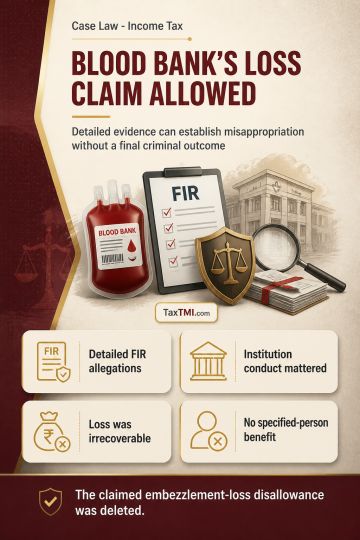
Embezzlement losses in charitable institutions remain allowable when misappropriation is established, irrecoverable, and not a specified-person benefi...
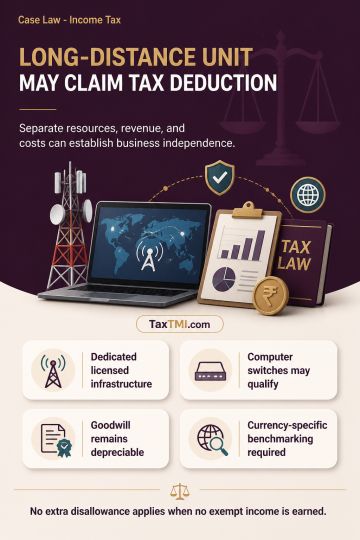
National long-distance undertaking status supports deduction where separately licensed infrastructure, resources, revenue, and expenditure establish c...
Agency reimbursement income follows contractual deposit-liability computation, while pending deposit collections do not constitute deemed-dividend loa...
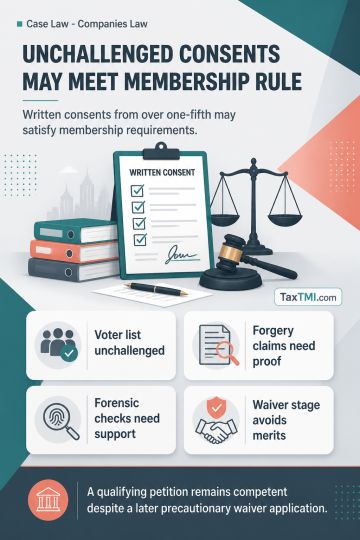
Membership-consent thresholds for oppression petitions are satisfied by unchallenged voter-list consents, while unsupported forgery claims require pro...
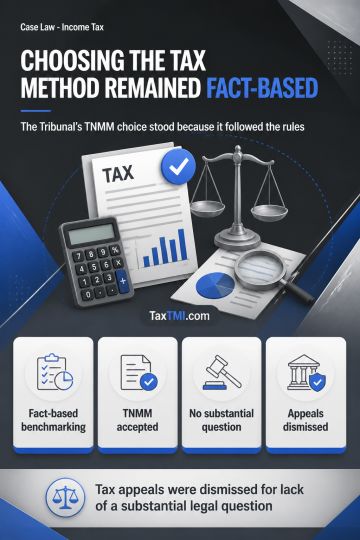
Transfer-pricing method selection between the Comparable Uncontrolled Price method and the Transactional Net Margin Method is primarily a fact-based benchmarking issue. The Tribunal's acceptance of TNMM as the most appropriate method was treated as sustainable where it was not perverse or contrary to the record. Mere disagreement over the appropriate method does not create a substantial question of law under section 260A unless the selected method contravenes prescribed rules. Differences between associated-enterprise and non-associated-enterprise transactions were also considered within the benchmarking analysis. The tax appeals were dismissed because the transfer-pricing questions raised no substantial question of law.
Transfer-pricing method selection between the Comparable Uncontrolled Price method and the Transactional Net Margin Method is primarily a fact-based benchmarking issue. The Tribunal's acceptance of TNMM as the most appropriate method was treated as sustainable where it was not perverse or contrary to the record. Mere disagreement over the appropriate method does not create a substantial question of law under section 260A unless the selected method contravenes prescribed rules. Differences between associated-enterprise and non-associated-enterprise transactions were also considered within the benchmarking analysis. The tax appeals were dismissed because the transfer-pricing questions raised no substantial question of law.
Note: It is a system-generated summary and is for quick reference only.
 TaxTMI
  TaxTMI
 of 4886