Defined public benefit can retain charitable character; registration renewal requires examining genuine activities and legal compliance, not surplus a...
Capital reduction is distinct from share buy-back, preventing buy-back tax; restructuring interest and related business deductions also survive scruti...
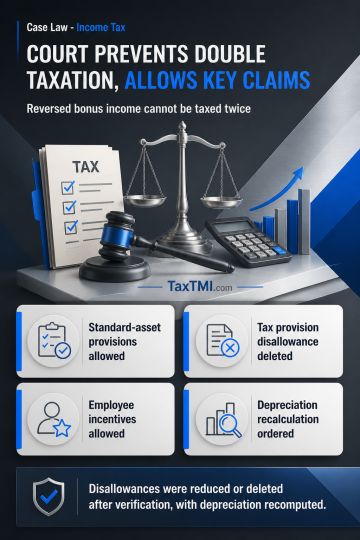
Transfer pricing and tax deductions upheld on established principles, while employee contributions and warranty provisions returned for fresh examinat...
Captive transfer pricing relies on industrial consumer tariffs, while genuine quotations can benchmark effluent treatment transfers under the Other Me...
Specific tariff classification for ophthalmic instruments and extended limitation principles determine the treatment of duty demands, confiscation, an...
Integrated golf function determines classification, placing launch monitors and simulators under other golf equipment rather than measuring instrument...
Transfer-pricing method selection between the Comparable Uncontrolled Price method and the Transactional Net Margin Method is primarily a fact-based benchmarking issue. The Tribunal's acceptance of TNMM as the most appropriate method was treated as sustainable where it was not perverse or contrary to the record. Mere disagreement over the appropriate method does not create a substantial question of law under section 260A unless the selected method contravenes prescribed rules. Differences between associated-enterprise and non-associated-enterprise transactions were also considered within the benchmarking analysis. The tax appeals were dismissed because the transfer-pricing questions raised no substantial question of law.
Transfer-pricing method selection between the Comparable Uncontrolled Price method and the Transactional Net Margin Method is primarily a fact-based benchmarking issue. The Tribunal's acceptance of TNMM as the most appropriate method was treated as sustainable where it was not perverse or contrary to the record. Mere disagreement over the appropriate method does not create a substantial question of law under section 260A unless the selected method contravenes prescribed rules. Differences between associated-enterprise and non-associated-enterprise transactions were also considered within the benchmarking analysis. The tax appeals were dismissed because the transfer-pricing questions raised no substantial question of law.
Note: It is a system-generated summary and is for quick reference only.
 TaxTMI
 of 4807





















 Join Channel



 TaxTMI
