Patent-settlement expenditure treated as commercially expedient revenue outlay, with foreign-law restrictions inapplicable before the prospective amen...
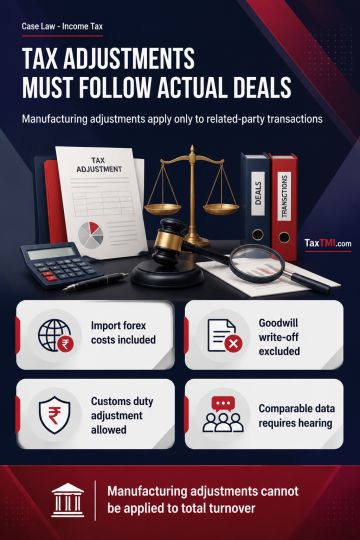
International transaction benchmarking restricts transfer pricing adjustments to associated-enterprise dealings, while functional comparability govern...
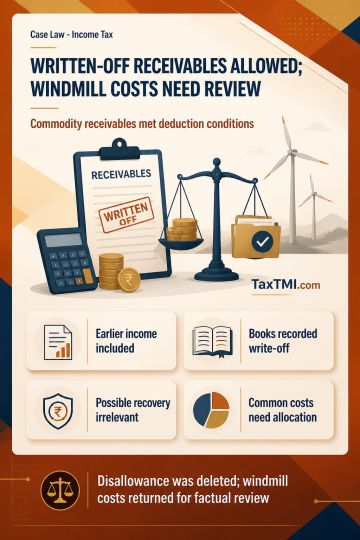
Commodity-trading receivables written off as bad debts qualify for deduction where they were previously included in income and written off in the books; a possible future recovery does not justify disallowance. Characterising the transactions as speculative or the amount as capital investment does not displace fulfilment of those conditions. The bad-debt disallowance was deleted, subject to taxation of any later recovery in the year received. For windmill-profit deductions, head-office expenses and depreciation on common assets require factual examination of their components, use and allocation to eligible operations. That computation was remanded for fresh adjudication.
Commodity-trading receivables written off as bad debts qualify for deduction where they were previously included in income and written off in the books; a possible future recovery does not justify disallowance. Characterising the transactions as speculative or the amount as capital investment does not displace fulfilment of those conditions. The bad-debt disallowance was deleted, subject to taxation of any later recovery in the year received. For windmill-profit deductions, head-office expenses and depreciation on common assets require factual examination of their components, use and allocation to eligible operations. That computation was remanded for fresh adjudication.
Note: It is a system-generated summary and is for quick reference only.
 TaxTMI
 of 4805
















 Join Channel


 TaxTMI
