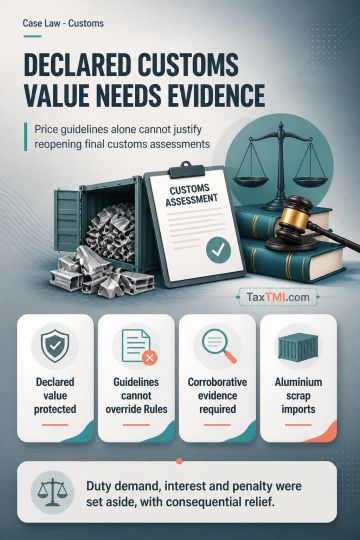
Transaction value cannot be rejected solely on non-statutory valuation guidelines without corroborative evidence supporting reassessment of final cust...
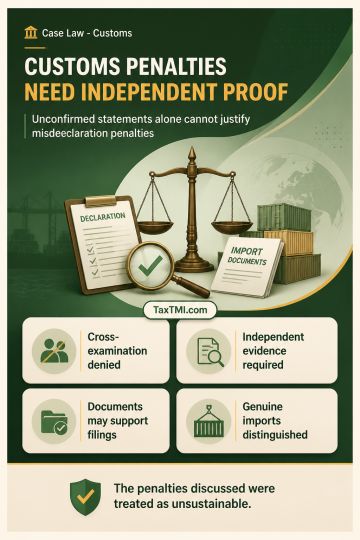
Cross-examination rights and corroborated evidence limit customs penalties for misdeclaration in genuine import transactions involving documented clea...
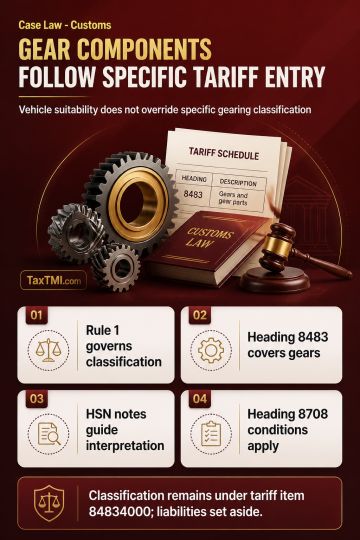
Tariff classification of vehicle gear components follows the specific gearing entry, displacing motor-vehicle parts classification and related liabili...
Necessary-party requirements limit impleadment of independent entities, while deferred consideration does not create an appealable adverse determinati...
Food supplement classification requires common parlance and authoritative tests, preventing treatment as proprietary Ayurvedic medicines without suppo...
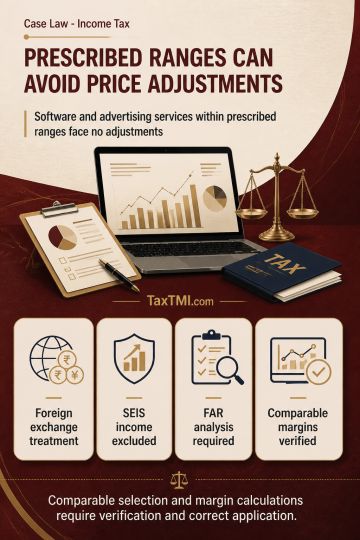
Transfer pricing tolerance rules govern software development and online advertisement support services where the tested party's margins or transaction prices fall within the prescribed range. Foreign exchange gains or losses linked to export invoices may be operating items for IT-enabled services, subject to verification and corresponding treatment in comparable-company margins. Income from sale of SEIS scrips is non-operating because it arises from an incentive scheme rather than service exports, requiring parity adjustments for comparables. Comparable selection requires final search criteria and detailed FAR analysis: companies with negligible IT-enabled services activity may be excluded, while additional or previously selected comparables may be reconsidered. Comparable-margin computations require verification and correct application.
Transfer pricing tolerance rules govern software development and online advertisement support services where the tested party's margins or transaction prices fall within the prescribed range. Foreign exchange gains or losses linked to export invoices may be operating items for IT-enabled services, subject to verification and corresponding treatment in comparable-company margins. Income from sale of SEIS scrips is non-operating because it arises from an incentive scheme rather than service exports, requiring parity adjustments for comparables. Comparable selection requires final search criteria and detailed FAR analysis: companies with negligible IT-enabled services activity may be excluded, while additional or previously selected comparables may be reconsidered. Comparable-margin computations require verification and correct application.
Note: It is a system-generated summary and is for quick reference only.
 TaxTMI
 of 4805















 Join Channel


 TaxTMI
