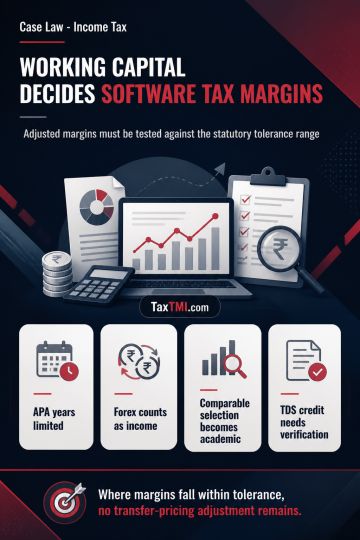
Working-capital adjustment determines whether software-services transfer-pricing margins fall within the statutory tolerance range, eliminating any ad...
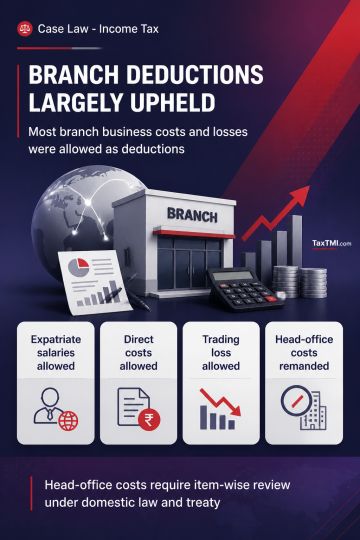
Permanent establishment deductions upheld for expatriate salaries, direct costs and trading losses, while head-office costs require fresh classificati...
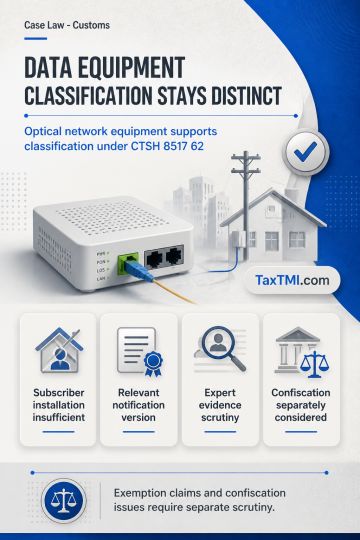
Data transmission equipment classification under CTSH 8517 62 remains distinct from residual classification, with exemption evidence requiring scrutin...
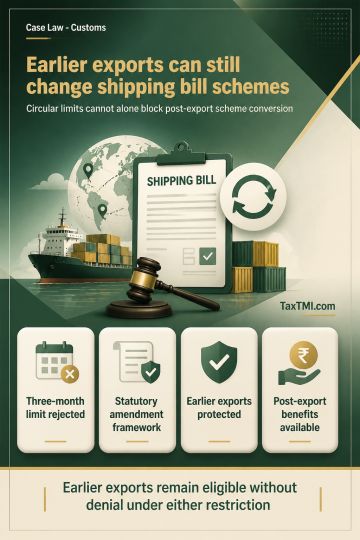
Post-export conversion of shipping bills from the Advance Authorisation Scheme to the duty drawback scheme cannot be refused solely because a request exceeds the three-month period prescribed by Circular No. 36/2010-Cus. That circular-based limitation is inconsistent with the statutory framework governing amendment of customs documents, and consequential export benefits remain available after export. Notification No. 11/2022-Cus. (N.T.), which introduced time limits for specified post-export conversions, does not apply retrospectively to exports made before its introduction. Shipping bills for such earlier exports remain eligible for conversion without denial based on either the circular limitation or the later notification.
Post-export conversion of shipping bills from the Advance Authorisation Scheme to the duty drawback scheme cannot be refused solely because a request exceeds the three-month period prescribed by Circular No. 36/2010-Cus. That circular-based limitation is inconsistent with the statutory framework governing amendment of customs documents, and consequential export benefits remain available after export. Notification No. 11/2022-Cus. (N.T.), which introduced time limits for specified post-export conversions, does not apply retrospectively to exports made before its introduction. Shipping bills for such earlier exports remain eligible for conversion without denial based on either the circular limitation or the later notification.
Note: It is a system-generated summary and is for quick reference only.
 TaxTMI
 of 4805










 Join Channel


 TaxTMI