Origin Declaration authentication governs preferential tariff claims under India-UK CETA, requiring a validated reference number before import clearan...
Separate assessment orders for different years remain valid when distinct notices and hearing opportunities prevent prejudice from combined proceeding...
Defined public benefit can retain charitable character; registration renewal requires examining genuine activities and legal compliance, not surplus a...
Capital reduction is distinct from share buy-back, preventing buy-back tax; restructuring interest and related business deductions also survive scruti...
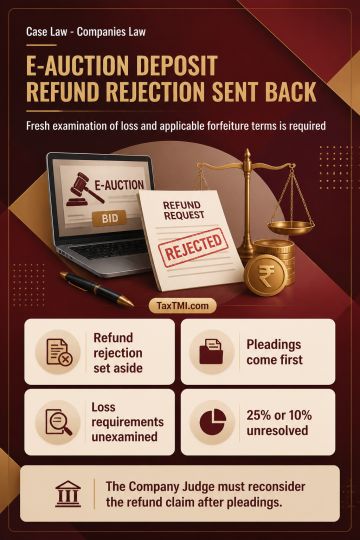
Forfeiture of earnest money in an e-auction required fresh consideration under Section 74 of the Indian Contract Act because the statutory requirements governing contractual forfeiture, including the necessity and quantum of loss, had not been raised or examined. The applicable e-auction terms also required determination of whether the forfeitable amount was 25% or 10% of the successful bid. The High Court set aside the rejection of the refund claim and remitted that issue to the Company Judge after completion of pleadings, leaving the merits of forfeiture open.
Forfeiture of earnest money in an e-auction required fresh consideration under Section 74 of the Indian Contract Act because the statutory requirements governing contractual forfeiture, including the necessity and quantum of loss, had not been raised or examined. The applicable e-auction terms also required determination of whether the forfeitable amount was 25% or 10% of the successful bid. The High Court set aside the rejection of the refund claim and remitted that issue to the Company Judge after completion of pleadings, leaving the merits of forfeiture open.
Note: It is a system-generated summary and is for quick reference only.
 TaxTMI
  TaxTMI
 of 4811






















 Join Channel