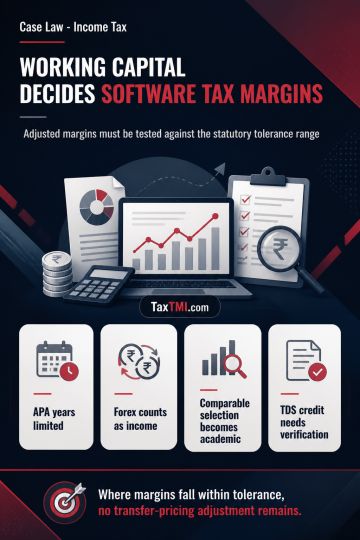
Working-capital adjustment determines whether software-services transfer-pricing margins fall within the statutory tolerance range, eliminating any ad...
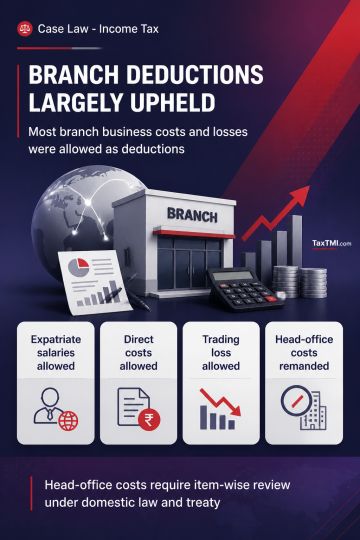
Permanent establishment deductions upheld for expatriate salaries, direct costs and trading losses, while head-office costs require fresh classificati...
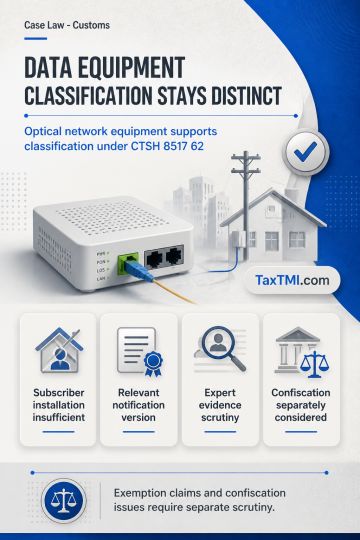
Data transmission equipment classification under CTSH 8517 62 remains distinct from residual classification, with exemption evidence requiring scrutin...
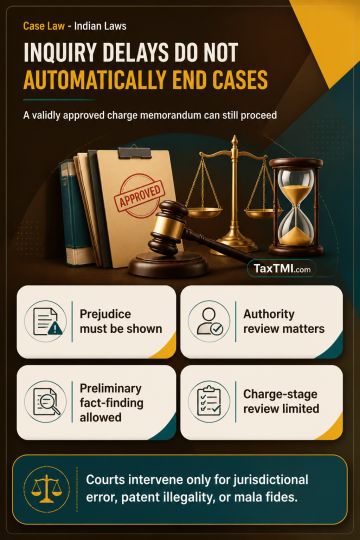
Rule 14(24) of the CCS (CCA) Rules does not automatically invalidate disciplinary proceedings merely because an inquiry exceeds the prescribed period without a written extension. Its time prescription is directory because it specifies no abatement or invalidation consequence; intervention requires inordinate unexplained delay, demonstrable prejudice, mala fides, or oppressive proceedings. Deferred promotion during pending proceedings alone is not legal prejudice. Approval of a charge memorandum is valid where the competent disciplinary authority considered the proposal, vigilance advice and relevant records; unsupported allegations of mechanical approval are insufficient. Preliminary fact-finding during deputation is permissible, and judicial review at the charge stage remains limited to jurisdictional error, patent illegality, mala fides, or fundamental statutory violation.
Rule 14(24) of the CCS (CCA) Rules does not automatically invalidate disciplinary proceedings merely because an inquiry exceeds the prescribed period without a written extension. Its time prescription is directory because it specifies no abatement or invalidation consequence; intervention requires inordinate unexplained delay, demonstrable prejudice, mala fides, or oppressive proceedings. Deferred promotion during pending proceedings alone is not legal prejudice. Approval of a charge memorandum is valid where the competent disciplinary authority considered the proposal, vigilance advice and relevant records; unsupported allegations of mechanical approval are insufficient. Preliminary fact-finding during deputation is permissible, and judicial review at the charge stage remains limited to jurisdictional error, patent illegality, mala fides, or fundamental statutory violation.
Note: It is a system-generated summary and is for quick reference only.
 TaxTMI
 of 4805









 Join Channel


 TaxTMI