Defined public benefit can retain charitable character; registration renewal requires examining genuine activities and legal compliance, not surplus a...
Capital reduction is distinct from share buy-back, preventing buy-back tax; restructuring interest and related business deductions also survive scruti...
Transfer pricing and tax deductions upheld on established principles, while employee contributions and warranty provisions returned for fresh examinat...
Captive transfer pricing relies on industrial consumer tariffs, while genuine quotations can benchmark effluent treatment transfers under the Other Me...
Specific tariff classification for ophthalmic instruments and extended limitation principles determine the treatment of duty demands, confiscation, an...
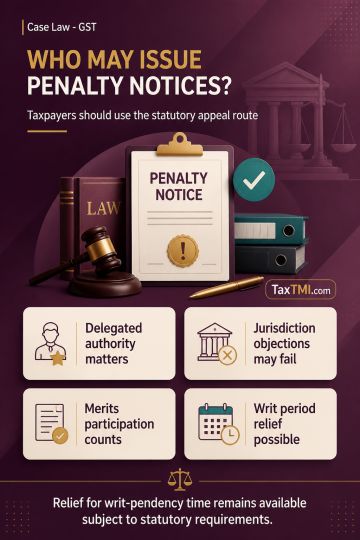
Under the UPGST Act, State circulars are described as placing penalty proceedings under Section 122 within the framework of Section 127 and authorising the Deputy Commissioner of State Tax where the prescribed turnover threshold is met. A jurisdictional objection to a penalty show-cause notice was therefore considered prima facie untenable. The doctrine of election also applies where a taxpayer participates in proceedings on merits without raising a jurisdictional objection and challenges the adverse penalty order through writ jurisdiction. The taxpayer should pursue the statutory appellate remedy, with Limitation Act relief for the writ-pendency period available subject to statutory requirements.
Under the UPGST Act, State circulars are described as placing penalty proceedings under Section 122 within the framework of Section 127 and authorising the Deputy Commissioner of State Tax where the prescribed turnover threshold is met. A jurisdictional objection to a penalty show-cause notice was therefore considered prima facie untenable. The doctrine of election also applies where a taxpayer participates in proceedings on merits without raising a jurisdictional objection and challenges the adverse penalty order through writ jurisdiction. The taxpayer should pursue the statutory appellate remedy, with Limitation Act relief for the writ-pendency period available subject to statutory requirements.
Note: It is a system-generated summary and is for quick reference only.
 TaxTMI
  TaxTMI
 of 4807






















 Join Channel