Specified regulatory authority income receives conditional tax exemption, subject to non-commercial activity, unchanged income character, and return f...
Tax exemption for regulatory authority income applies retrospectively, subject to non-commercial activity, unchanged income sources, and return-filing...
Input tax credit conditions remain constitutionally valid, with eligible recipient claims considered under GST circulars and retrospective filing dead...
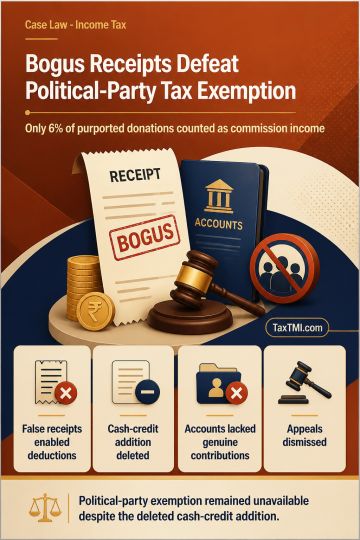
Bogus donation receipts justified commission income assessment and defeated political-party tax exemption for inaccurate accounts and reporting failur...
Pure reimbursement without income element escapes tax withholding, while delayed withholding and unsupported provisions face deferred or renewed scrut...
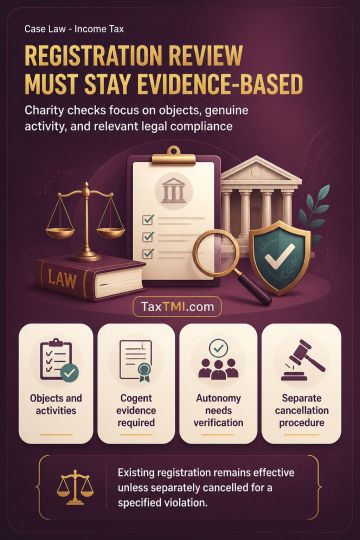
Public benefit requirement defeats charitable registration where residents' association services are reciprocal, member-only facilities governed by mu...
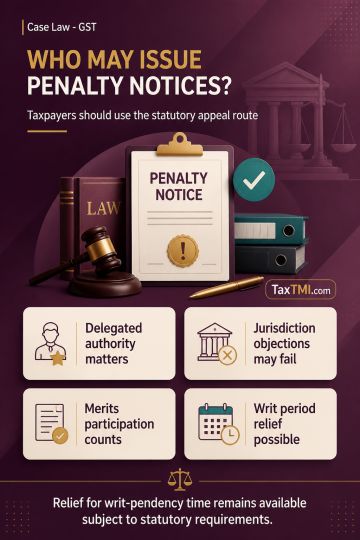
Under the UPGST Act, State circulars are described as placing penalty proceedings under Section 122 within the framework of Section 127 and authorising the Deputy Commissioner of State Tax where the prescribed turnover threshold is met. A jurisdictional objection to a penalty show-cause notice was therefore considered prima facie untenable. The doctrine of election also applies where a taxpayer participates in proceedings on merits without raising a jurisdictional objection and challenges the adverse penalty order through writ jurisdiction. The taxpayer should pursue the statutory appellate remedy, with Limitation Act relief for the writ-pendency period available subject to statutory requirements.
Under the UPGST Act, State circulars are described as placing penalty proceedings under Section 122 within the framework of Section 127 and authorising the Deputy Commissioner of State Tax where the prescribed turnover threshold is met. A jurisdictional objection to a penalty show-cause notice was therefore considered prima facie untenable. The doctrine of election also applies where a taxpayer participates in proceedings on merits without raising a jurisdictional objection and challenges the adverse penalty order through writ jurisdiction. The taxpayer should pursue the statutory appellate remedy, with Limitation Act relief for the writ-pendency period available subject to statutory requirements.
Note: It is a system-generated summary and is for quick reference only.
 TaxTMI
 of 4805


















 Join Channel


 TaxTMI