Administrative fraud classification suspension does not halt independent criminal investigation or warrant-based searches into alleged economic offenc...
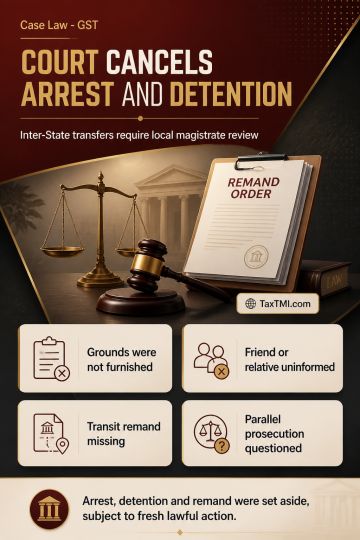
Arrest safeguards and transit remand requirements invalidated detention following inter-State transfer without communicated grounds or magistrate auth...
Arrest safeguards require disclosed grounds, relative intimation and transit remand, while duplicate prosecution under the CGST framework is unsustain...
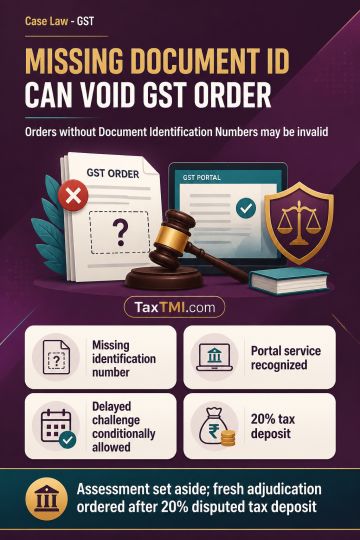
Document Identification Number defects can invalidate GST assessments, with delayed challenges entertained conditionally where patent irregularities e...
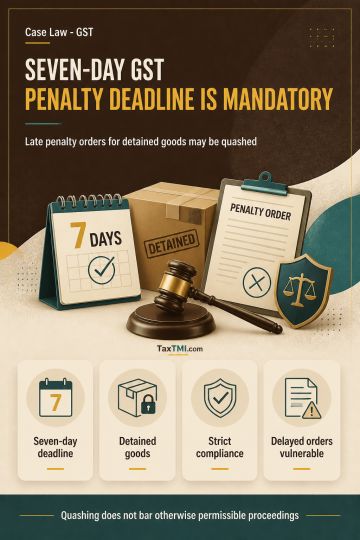
Section 129(3) of the CGST/KGST Act requires a proper officer to pass a penalty order within seven days of serving a detention notice for goods in transit. The use of "shall" is treated as mandatory because the provision governs coercive detention and seizure powers, even though no express consequence is specified for delay. A penalty order issued forty-seven days after notice was treated as beyond the prescribed limitation and without jurisdiction. The resulting penalty and appellate orders were set aside, with consequential release of the bank guarantee.
Section 129(3) of the CGST/KGST Act requires a proper officer to pass a penalty order within seven days of serving a detention notice for goods in transit. The use of "shall" is treated as mandatory because the provision governs coercive detention and seizure powers, even though no express consequence is specified for delay. A penalty order issued forty-seven days after notice was treated as beyond the prescribed limitation and without jurisdiction. The resulting penalty and appellate orders were set aside, with consequential release of the bank guarantee.
Note: It is a system-generated summary and is for quick reference only.
 TaxTMI
 of 4803













 Join Channel



 TaxTMI
