Opportunity to respond to jurisdictional reports is mandatory before customs settlement duty enhancement; connected applications require consistent ad...
Specific customs headings for scaffolding components prevail over general classification, invalidating misclassification proceedings and enabling with...
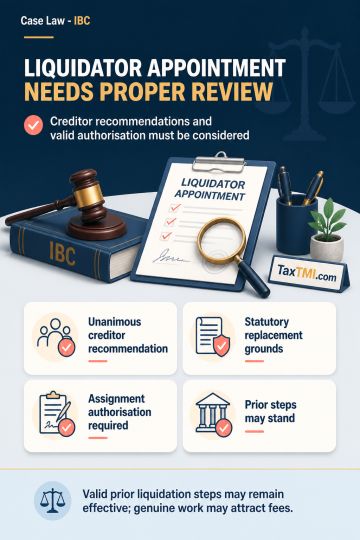
Liquidator appointment under Section 34 requires consideration of creditor recommendations, valid professional authorisation, and preservation of vali...
Income-tax exemption for specified regulatory fees and government grants applies subject to non-commercial activity and continuing compliance conditio...
Digital accessibility audit and remediation deadlines extended, while all other disability-compliance obligations for regulated entities remain unchan...
Section 129(3) of the CGST/KGST Act requires a proper officer to pass a penalty order within seven days of serving a detention notice for goods in transit. The use of "shall" is treated as mandatory because the provision governs coercive detention and seizure powers, even though no express consequence is specified for delay. A penalty order issued forty-seven days after notice was treated as beyond the prescribed limitation and without jurisdiction. The resulting penalty and appellate orders were set aside, with consequential release of the bank guarantee.
Section 129(3) of the CGST/KGST Act requires a proper officer to pass a penalty order within seven days of serving a detention notice for goods in transit. The use of "shall" is treated as mandatory because the provision governs coercive detention and seizure powers, even though no express consequence is specified for delay. A penalty order issued forty-seven days after notice was treated as beyond the prescribed limitation and without jurisdiction. The resulting penalty and appellate orders were set aside, with consequential release of the bank guarantee.
Note: It is a system-generated summary and is for quick reference only.
 TaxTMI
 of 4803


















 Join Channel



 TaxTMI
