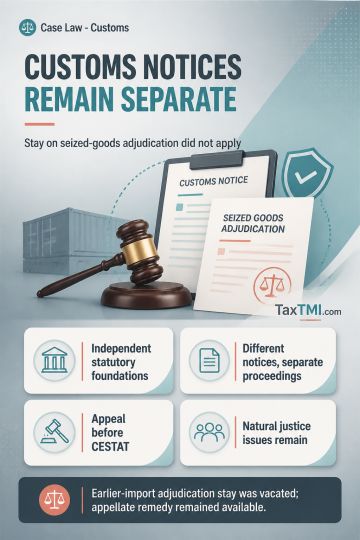
Independent show-cause notices remain separate proceedings, while customs adjudication challenges should ordinarily follow the statutory appellate rem...
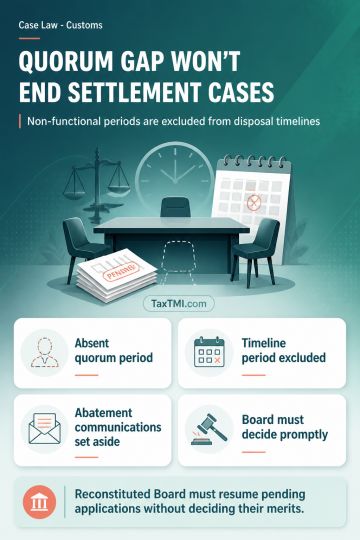
Institutional incapacity in customs settlement proceedings excludes non-functional quorum periods from statutory disposal timelines, preventing automa...
Interactive touchscreen panels with integrated computing functions fall under automatic data-processing machines rather than display monitors for cust...
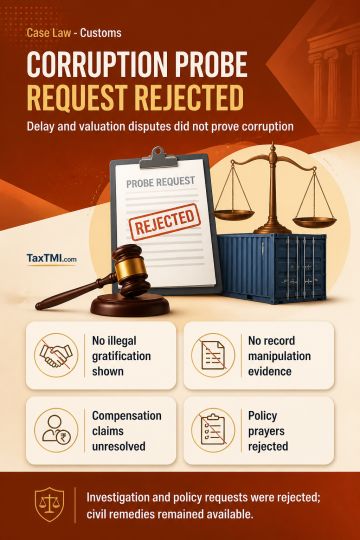
Ex parte injunction service requirements were substantially met, while civil recovery and SFIO investigation into provident fund defalcation continued...
Section 129(3) of the CGST/KGST Act requires a proper officer to pass a penalty order within seven days of serving a detention notice for goods in transit. The use of "shall" is treated as mandatory because the provision governs coercive detention and seizure powers, even though no express consequence is specified for delay. A penalty order issued forty-seven days after notice was treated as beyond the prescribed limitation and without jurisdiction. The resulting penalty and appellate orders were set aside, with consequential release of the bank guarantee.
Section 129(3) of the CGST/KGST Act requires a proper officer to pass a penalty order within seven days of serving a detention notice for goods in transit. The use of "shall" is treated as mandatory because the provision governs coercive detention and seizure powers, even though no express consequence is specified for delay. A penalty order issued forty-seven days after notice was treated as beyond the prescribed limitation and without jurisdiction. The resulting penalty and appellate orders were set aside, with consequential release of the bank guarantee.
Note: It is a system-generated summary and is for quick reference only.
 TaxTMI
 of 4801















 Join Channel



 TaxTMI