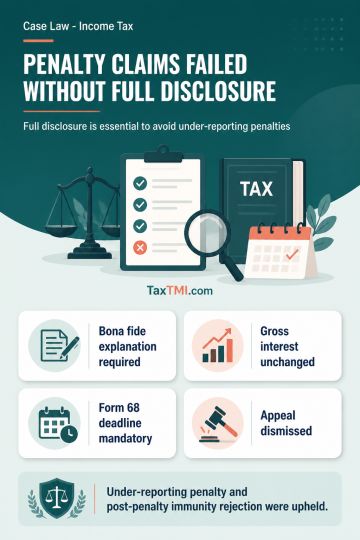
Bona fide disclosure requirements govern under-reporting penalties, and post-penalty immunity applications cannot secure available statutory protectio...
Certificate-of-origin verification procedure governs preferential customs benefits; denial without retroactive verification was set aside with consequ...
Disciplinary Committee jurisdiction and mandatory investigation requirements invalidated cancellation of an insolvency professional's registration and...
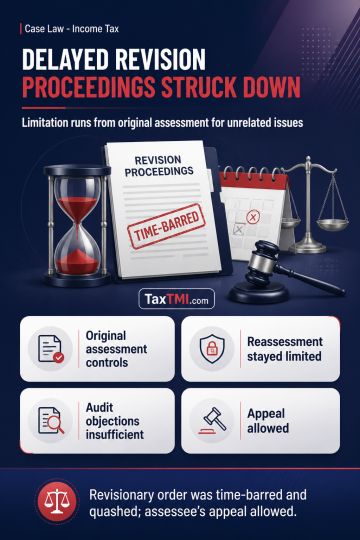
Section 263 revision requires the assessment order to be both erroneous and prejudicial to the interests of the Revenue. Where the Assessing Officer has called for and considered details on unsecured loans and trade payables, revision cannot rest merely on audit objections or an assumption that further inquiry would produce an addition under section 68. Explanation 2 creates a deeming framework for insufficient inquiry but does not remove the twin statutory requirements. In the stated circumstances, the assessment was made after inquiry, no revenue prejudice was identified, and the revisional order was quashed.
Section 263 revision requires the assessment order to be both erroneous and prejudicial to the interests of the Revenue. Where the Assessing Officer has called for and considered details on unsecured loans and trade payables, revision cannot rest merely on audit objections or an assumption that further inquiry would produce an addition under section 68. Explanation 2 creates a deeming framework for insufficient inquiry but does not remove the twin statutory requirements. In the stated circumstances, the assessment was made after inquiry, no revenue prejudice was identified, and the revisional order was quashed.
Note: It is a system-generated summary and is for quick reference only.
 TaxTMI
 of 4805











 Join Channel



 TaxTMI
