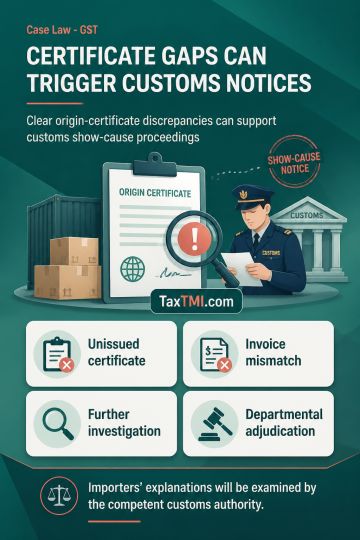
Jurisdictional facts in certificate-of-origin discrepancies can support customs show-cause proceedings, leaving factual explanations for departmental ...
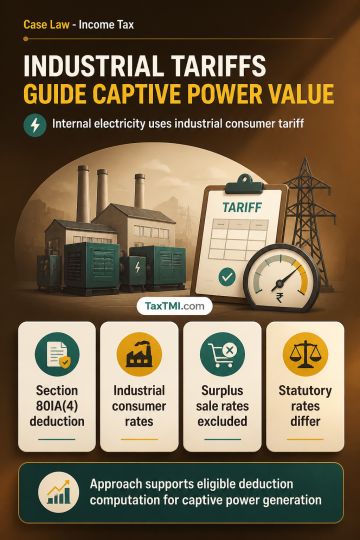
Market value for captive electricity consumption follows industrial consumer tariffs, supporting profit computation for the power generation deduction...
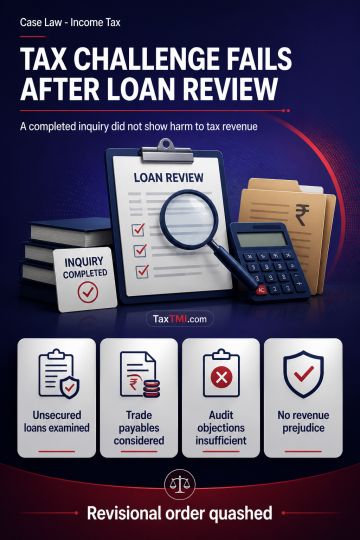
Section 263 revision requires the assessment order to be both erroneous and prejudicial to the interests of the Revenue. Where the Assessing Officer has called for and considered details on unsecured loans and trade payables, revision cannot rest merely on audit objections or an assumption that further inquiry would produce an addition under section 68. Explanation 2 creates a deeming framework for insufficient inquiry but does not remove the twin statutory requirements. In the stated circumstances, the assessment was made after inquiry, no revenue prejudice was identified, and the revisional order was quashed.
Section 263 revision requires the assessment order to be both erroneous and prejudicial to the interests of the Revenue. Where the Assessing Officer has called for and considered details on unsecured loans and trade payables, revision cannot rest merely on audit objections or an assumption that further inquiry would produce an addition under section 68. Explanation 2 creates a deeming framework for insufficient inquiry but does not remove the twin statutory requirements. In the stated circumstances, the assessment was made after inquiry, no revenue prejudice was identified, and the revisional order was quashed.
Note: It is a system-generated summary and is for quick reference only.
 TaxTMI
 of 4805







 Join Channel


 TaxTMI