Customs-controlled cargo movement now includes GDL, subject to EXIM prioritisation, segregation, verification, reconciliation and enforcement safeguar...
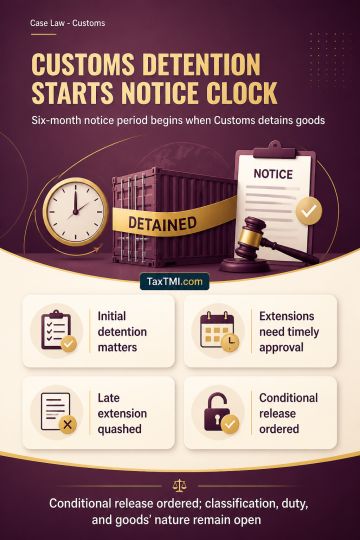
Customs detention of imported goods is synonymous with seizure once the goods are under Customs control and cannot be cleared without permission; a formal seizure memo is only a later procedural step. The six-month period for issuing a show-cause notice therefore runs from initial detention. Any statutory extension of that period must be granted and communicated before the original period expires; a later extension is without jurisdiction. The time-barred extension was quashed and the goods were directed to be released upon an indemnity bond and proof that any sale would be solely for animal-feed use. Classification, duty liability and the goods' nature remain open for adjudication.
Customs detention of imported goods is synonymous with seizure once the goods are under Customs control and cannot be cleared without permission; a formal seizure memo is only a later procedural step. The six-month period for issuing a show-cause notice therefore runs from initial detention. Any statutory extension of that period must be granted and communicated before the original period expires; a later extension is without jurisdiction. The time-barred extension was quashed and the goods were directed to be released upon an indemnity bond and proof that any sale would be solely for animal-feed use. Classification, duty liability and the goods' nature remain open for adjudication.
Note: It is a system-generated summary and is for quick reference only.
 TaxTMI
  TaxTMI
 of 4881