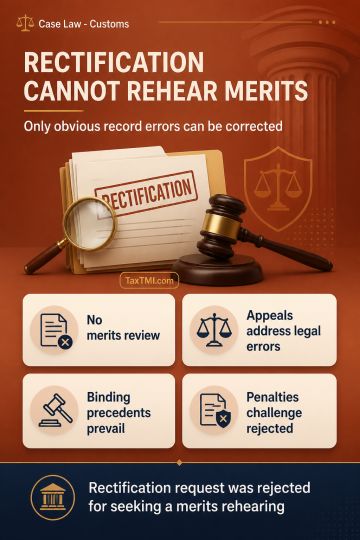
Rectification of mistake remains limited to self-evident record errors, preventing merits review through miscellaneous applications and preserving fin...
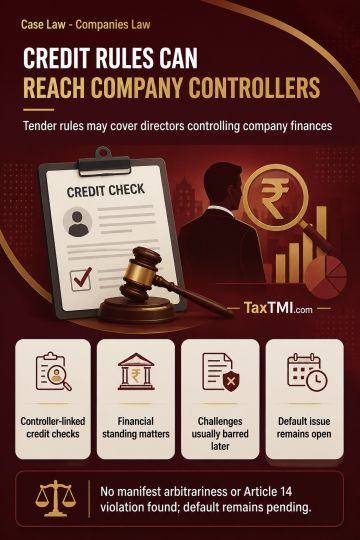
Tender creditworthiness conditions may extend to de facto Promoter Directors, with post-participation challenges generally barred absent arbitrariness...
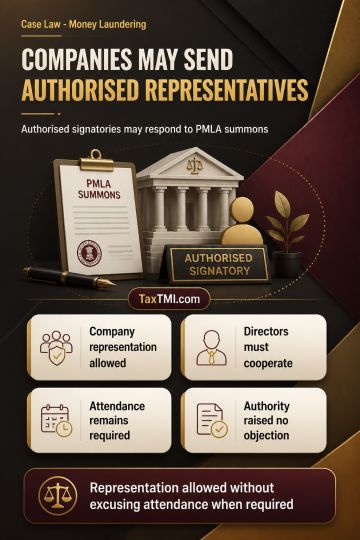
Corporate representation in PMLA summons proceedings permitted through an authorised signatory, subject to directors' continuing cooperation and atten...
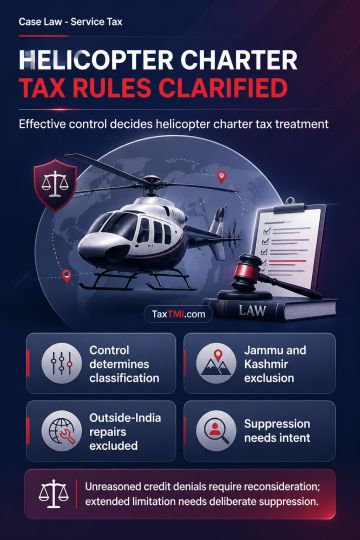
Helicopter charter classification requires effective control analysis, while territorial performance, reasoned credit orders and wilful suppression de...
Specified fund definition expands PAN exemption eligibility for registered alternative investment funds and qualifying International Financial Service...
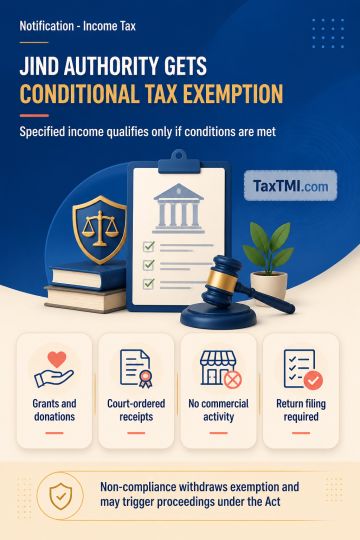
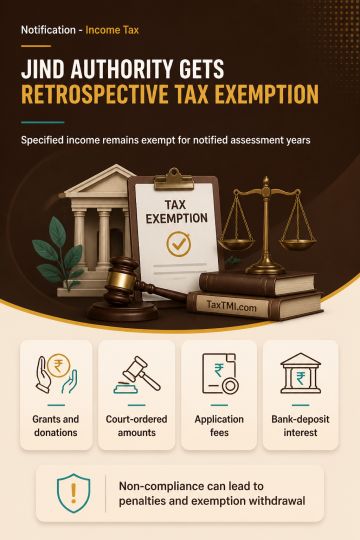
Tax exemption for specified legal-services authority income applies retrospectively, subject to non-commercial activity, unchanged income sources, and...
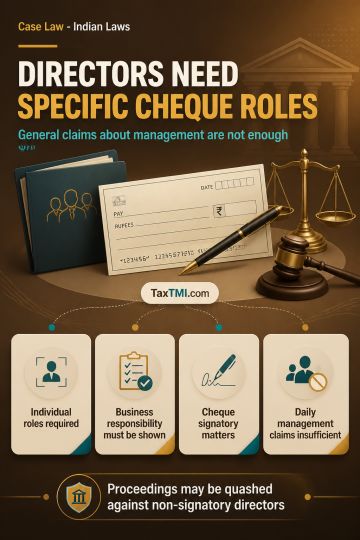
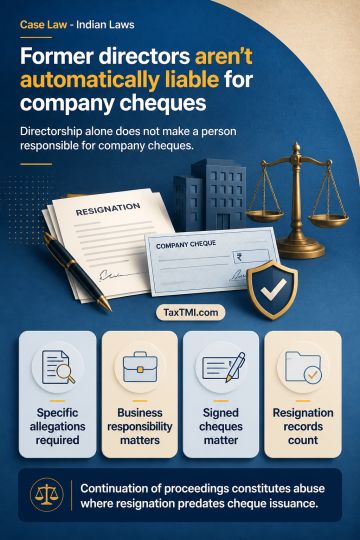
Section 141 of the Negotiable Instruments Act does not impose automatic vicarious liability on a director merely because of directorship. A cheque-dishonour complaint must specifically allege that the person was in charge of and responsible for the company's business when the offence occurred, or that it resulted from that person's consent, connivance or neglect. General allegations are inadequate, particularly where the person neither signed the cheques nor remained a director when they were issued and dishonoured. Statutory records establishing resignation before issuance of the cheques negate such liability, and continuation of proceedings in those circumstances constitutes abuse of process.
Section 141 of the Negotiable Instruments Act does not impose automatic vicarious liability on a director merely because of directorship. A cheque-dishonour complaint must specifically allege that the person was in charge of and responsible for the company's business when the offence occurred, or that it resulted from that person's consent, connivance or neglect. General allegations are inadequate, particularly where the person neither signed the cheques nor remained a director when they were issued and dishonoured. Statutory records establishing resignation before issuance of the cheques negate such liability, and continuation of proceedings in those circumstances constitutes abuse of process.
Note: It is a system-generated summary and is for quick reference only.
 TaxTMI
 of 4805









 Join Channel


 TaxTMI