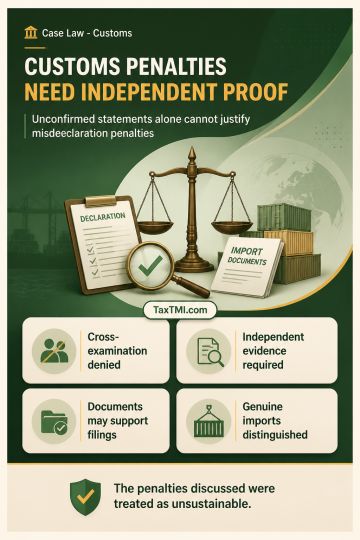
Cross-examination rights and corroborated evidence limit customs penalties for misdeclaration in genuine import transactions involving documented clea...
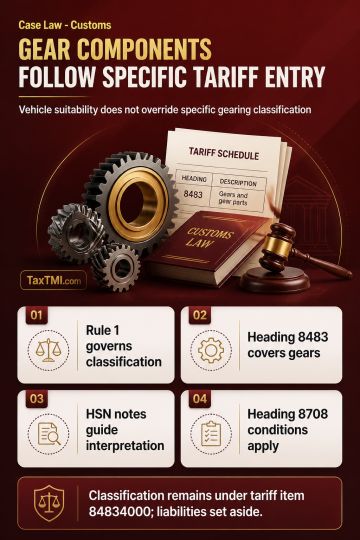
Tariff classification of vehicle gear components follows the specific gearing entry, displacing motor-vehicle parts classification and related liabili...
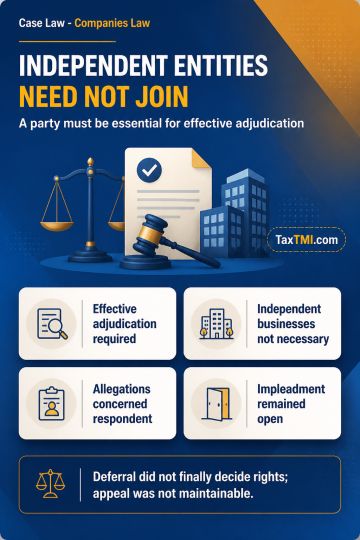
Necessary-party requirements limit impleadment of independent entities, while deferred consideration does not create an appealable adverse determinati...
Food supplement classification requires common parlance and authoritative tests, preventing treatment as proprietary Ayurvedic medicines without suppo...
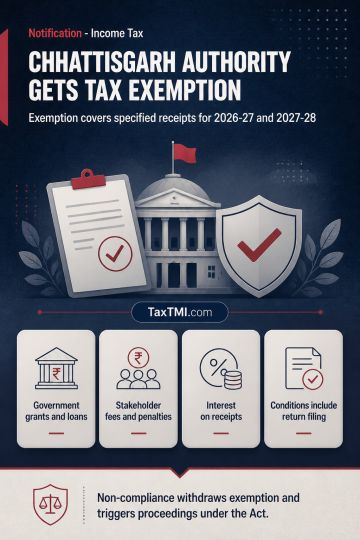
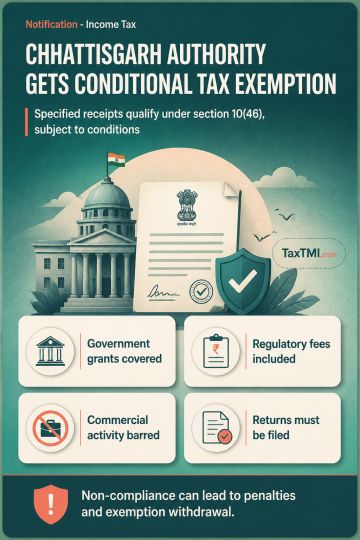
Specified regulatory authority income receives conditional tax exemption, subject to non-commercial activity, unchanged income character, and return f...
Tax exemption for regulatory authority income applies retrospectively, subject to non-commercial activity, unchanged income sources, and return-filing...
Alternative statutory remedy under GST did not prevent...
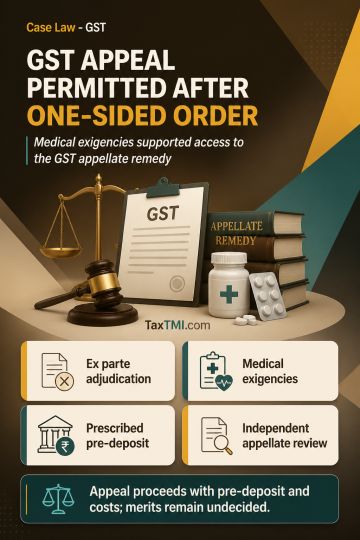
Alternative GST remedy permitted protective writ intervention for ex parte adjudication, preserving independent appellate review of input tax credit disputes.
Contents
Summary
Note
Bookmark
Share
✓ Copied successfully !
Print
Print Options
For full text, please login
Login to TaxTMI
Verification Pending
The Email Id has not been verified. Click on the link we have sent on
Alternative statutory remedy under GST did not prevent protective writ intervention where an ex parte adjudication was linked to partners' medical exigencies and substantial tax, interest and penalty exposure. The input tax credit dispute remained undecided on merits. Recourse to the statutory appeal was permitted subject to payment of the prescribed pre-deposit and imposed costs, with the appellate authority required to entertain the appeal and determine it independently in accordance with law. The writ proceedings therefore preserved access to the appellate remedy without deciding the underlying input tax credit demand.
Alternative statutory remedy under GST did not prevent protective writ intervention where an ex parte adjudication was linked to partners' medical exigencies and substantial tax, interest and penalty exposure. The input tax credit dispute remained undecided on merits. Recourse to the statutory appeal was permitted subject to payment of the prescribed pre-deposit and imposed costs, with the appellate authority required to entertain the appeal and determine it independently in accordance with law. The writ proceedings therefore preserved access to the appellate remedy without deciding the underlying input tax credit demand.
Note: It is a system-generated summary and is for quick reference only.
 TaxTMI
 of 4798













 Join Channel


 TaxTMI

